

Romantic Riches: How One Afternoon Connected Mendelssohn to Dvořák
Liner Notes From the Archive
Music Evolution
Romantic Riches: How One Afternoon Connected Mendelssohn to Dvořák
In February 2018, the La Mirada Symphony presented Romantic Riches, an afternoon built around the Brahms Double Concerto. Concertmaster Sorah Myung and cellist Greg Adamson took the solo spotlight in a work Brahms wrote to win back his closest friend. Discover how that story ties Mendelssohn to Dvořák and turns one concert program into a musical family tree.
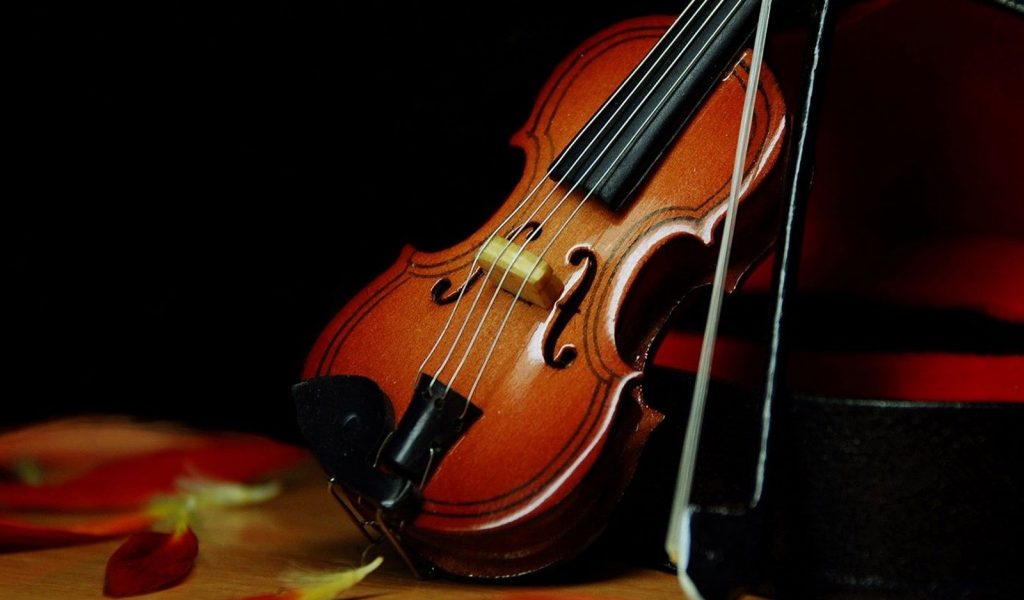
A sea cave in Scotland and a broken friendship both found their way onto one La Mirada Symphony program. Here is the story behind the music.
On February 25, 2018, the La Mirada Symphony turned back the clock to the heart of the Romantic era. Conductor Alan Mautner led the orchestra through an afternoon called Romantic Riches at La Mirada Theatre for the Performing Arts, the second concert of the 2017/2018 season. Two of the orchestra’s own principal players stepped forward as soloists, with concertmaster Sorah Myung on violin and Greg Adamson on cello.
At first glance, the program looks like a classic sampler of nineteenth-century greats. Look a little closer, however, and a hidden story emerges. Each composer on the bill connects to the next through mentorship and friendship, so the concert played out like a family tree set to music.
The Program
- MendelssohnThe Hebrides Overture (Fingal’s Cave)
- BrahmsConcerto for Violin and Cello in A minor
- DvořákSymphony No. 6 in D major
Mendelssohn Sets Sail for Fingal’s Cave
The afternoon opened with a young man on vacation. In the summer of 1829, twenty-year-old Felix Mendelssohn toured Scotland and sailed out to the island of Staffa. There he encountered Fingal’s Cave, a towering sea cavern lined with columns of black basalt. The waves rolling into that cave stuck with him, and he sketched the opening theme in a letter home before he even left the islands.
Mendelssohn spent the next few years polishing the piece, and The Hebrides Overture premiered in London in 1832. Instead of telling a story, the music paints a seascape. Low strings swell like the tide, while the winds call out over the water like gulls. Even today, the overture ranks among the most vivid pieces of musical scenery ever written.
Mendelssohn also plays a quiet role in the rest of this story. In 1844, he conducted a twelve-year-old violin prodigy named Joseph Joachim in a celebrated London performance of Beethoven’s Violin Concerto. That boy grew up to become one of the most important violinists of the century. More to the point, he became Johannes Brahms’s closest friend.
Brahms Writes a Peace Offering
Brahms and Joachim shared decades of friendship, and Brahms wrote his famous Violin Concerto with Joachim in mind. In the early 1880s, however, the friendship cracked. Joachim’s marriage collapsed amid his suspicions about his wife, Amalie, and Brahms took her side. Joachim felt betrayed, and the two men drifted apart for years.
Brahms responded the way great composers often do. He wrote music. In 1887, he completed his Double Concerto for Violin and Cello, a work that many historians read as an olive branch. He wrote the violin part for Joachim and the cello part for Robert Hausmann, the cellist in Joachim’s string quartet. The two soloists premiered the concerto together in Cologne that October, and the old friends began to repair their bond.
Listen for that history in the music itself. The violin and cello rarely compete for the spotlight. Instead, they finish each other’s musical thoughts and often join forces as one giant instrument. The concerto also turned out to be the last orchestral work Brahms ever wrote, which gives its warmth an extra layer of meaning.
Two Soloists From Inside the Orchestra
For a concerto built on partnership, the La Mirada Symphony chose soloists who already share a stage every season. Sorah Myung serves as the orchestra’s concertmaster, the principal violinist who leads the string section and tunes the full ensemble. Greg Adamson anchors the cellos. Rather than bringing in strangers, the orchestra let two of its own leaders carry on the conversation Brahms wrote for his friends.
“We’re excited to feature two very talented players at the concert. Sorah Myung and Greg Adamson are at the top of their craft, and along with the symphony, the concert promises to be a memorable one.”David Derks, President, La Mirada Symphony
Dvořák Pays Tribute to His Champion
The family tree reaches its final branch with Antonín Dvořák. In the 1870s, Dvořák was a struggling musician in Prague who applied again and again for an Austrian state grant for young artists. Brahms sat on the jury that reviewed those applications, and he liked what he heard. In 1877, he recommended Dvořák to his own publisher, Fritz Simrock, and that introduction helped launch Dvořák onto the international stage.
Dvořák never forgot the favor. When he wrote his Symphony No. 6 in D major in 1880, he openly tipped his hat to his mentor. The symphony shares its key and its sunny, pastoral opening with Brahms’s Second Symphony. Even so, the voice belongs entirely to Dvořák. The third movement bursts into a furiant, a fiery Czech folk dance that keeps shifting its rhythmic accents and keeps listeners on their toes.
The symphony premiered in Prague in 1881 and quickly became the work that introduced Dvořák’s symphonies to audiences abroad. As a result, it made a fitting finale for an afternoon about artists lifting each other up.
An Afternoon That Started With Conversation
Concertgoers who arrived early got a head start on the music. A pre-concert discussion began at 2:15 p.m., offering background on the composers and the pieces before the downbeat. The orchestra then took the stage at 3:00 p.m. That format remains a favorite tradition, because a few minutes of context can transform how an audience hears a familiar piece.
The Story Behind the La Mirada Symphony
The La Mirada Symphony began as one woman’s dream. In 1961, La Mirada resident and concert pianist Blanche Nissim set out to build a symphony orchestra for her community. She rallied a determined group of local musicians and community advocates, and together they turned her idea into a reality.
More than six decades later, the orchestra still carries out her vision. Often called the jewel of La Mirada, the symphony presents free concerts for residents who value great music in their lives. At the same time, it gives talented local musicians a place to share their gifts with their neighbors.
A Home at La Mirada Theatre
The La Mirada Symphony performs at La Mirada Theatre for the Performing Arts, located at 14900 La Mirada Boulevard. The 1,251-seat venue has earned a reputation as one of the most beautiful and welcoming places to see live performance in Southern California. Along with its own season of plays and musicals, the theatre proudly serves as the orchestra’s home.
The music has changed since 2018, but the spirit of Romantic Riches lives on every season. Come hear the La Mirada Symphony live at La Mirada Theatre, where every concert is free.
We first published this piece as a concert announcement on January 30, 2018, and expanded it in 2026.
Keep Reading
Oct 26, 2026
Putting the Opera Back in The Phantom of the Opera
Oct 5, 2026
Why Does Music Give You Goosebumps?
Sep 28, 2026