

Putting the Opera Back in The Phantom of the Opera
Putting the Opera Back in The Phantom of the Opera
Most scores for the 1925 Phantom of the Opera settle for spooky organ music. Composer Scott Lasky went back to the opera house instead, rebuilding the film’s soundtrack from silent-era stock cues and the Faust music the story demands.
- 49 cues, most drawn from period silent-film stock music
- Gounod’s Faust restored to the scenes staged at the Paris Opera
- Original Don Juan Triumphant music for the Phantom at the organ
- A score built to honor Lon Chaney’s quieter, heartbroken moments
Most audiences know the Phantom of the Opera as a Halloween fixture. They picture a skull-faced figure lurking under Paris while an organ thunders somewhere in the dark. Scott Lasky, however, sees something else entirely. Lasky set out to write a Phantom of the Opera score for Rupert Julian’s 1925 silent film starring Lon Chaney. He started from a simple observation that many modern scores seem to miss. After all, the story takes place inside an opera house, so the opera on that stage matters.
As a result, Lasky’s Phantom of the Opera score restores the operatic world the film depicts. It also treats the title character as more than a monster. Below, in his own words, he walks through the history and choices that shaped all 49 cues.
The Stock Music Behind the Phantom of the Opera Score
To understand Lasky’s process, you first have to understand where silent film music came from. Around 1914, a new film music industry took shape, and it soon grew into an enormous body of work. In fact, more than 200 composers turned out thousands of original pieces and arrangements, all written to serve the movies.
This repertoire supplied movie theater orchestras with what the trade called stock cues. Typically, each cue ran two to three minutes. It matched a particular screen action or emotion, whether a rooftop chase or a quiet love scene. Many theaters therefore kept extensive libraries of this music on hand. Their musicians assembled a score for each new film by pulling the right pieces from the shelves. Today, Lasky owns a collection of these stock pieces, and that collection became the primary source for his Phantom of the Opera score.
Putting Faust Back on the Stage
From the start, one detail jumped out at Lasky. Both the film and Gaston Leroux’s novel center on the Paris Opera and its production of Charles Gounod’s Faust. Moreover, the film shows the opera on stage several times, and with real accuracy. For example, audiences see the opening scene of Act 1 and the Jewel Song. They also catch Marguerite at the spinning wheel and the famous trio that closes the opera.
Even so, Lasky has watched the film many times with contemporary scores that ignore Faust completely.
“Instead, they play some generic, scary music throughout, reducing the Phantom into this one-dimensional Halloween character, which, in my opinion, is completely wrong.”Scott Lasky
His objection, though, goes beyond taste. A century ago, the public regarded opera as the gold standard of entertainment. A far larger share of moviegoers knew the popular opera stories and their music. Consequently, those audiences would have recognized Faust the moment it appeared on screen.
In Lasky’s view, if the director cared enough to stage the opera faithfully, then the music deserves the same respect. For that reason, he made it a priority to restore the Faust music the story calls for. He reached well past the familiar ballet music into the rest of the opera.
The Man Behind the Mask
At the same time, Lasky has no interest in turning the Phantom into a romantic hero. In his opinion, the Broadway musical overly romanticized the character. Still, he believes a human side exists, and he wanted his score to bring it out. “Sure, he was a psychopathic criminal,” Lasky says, “but he was also a highly advanced musician.”
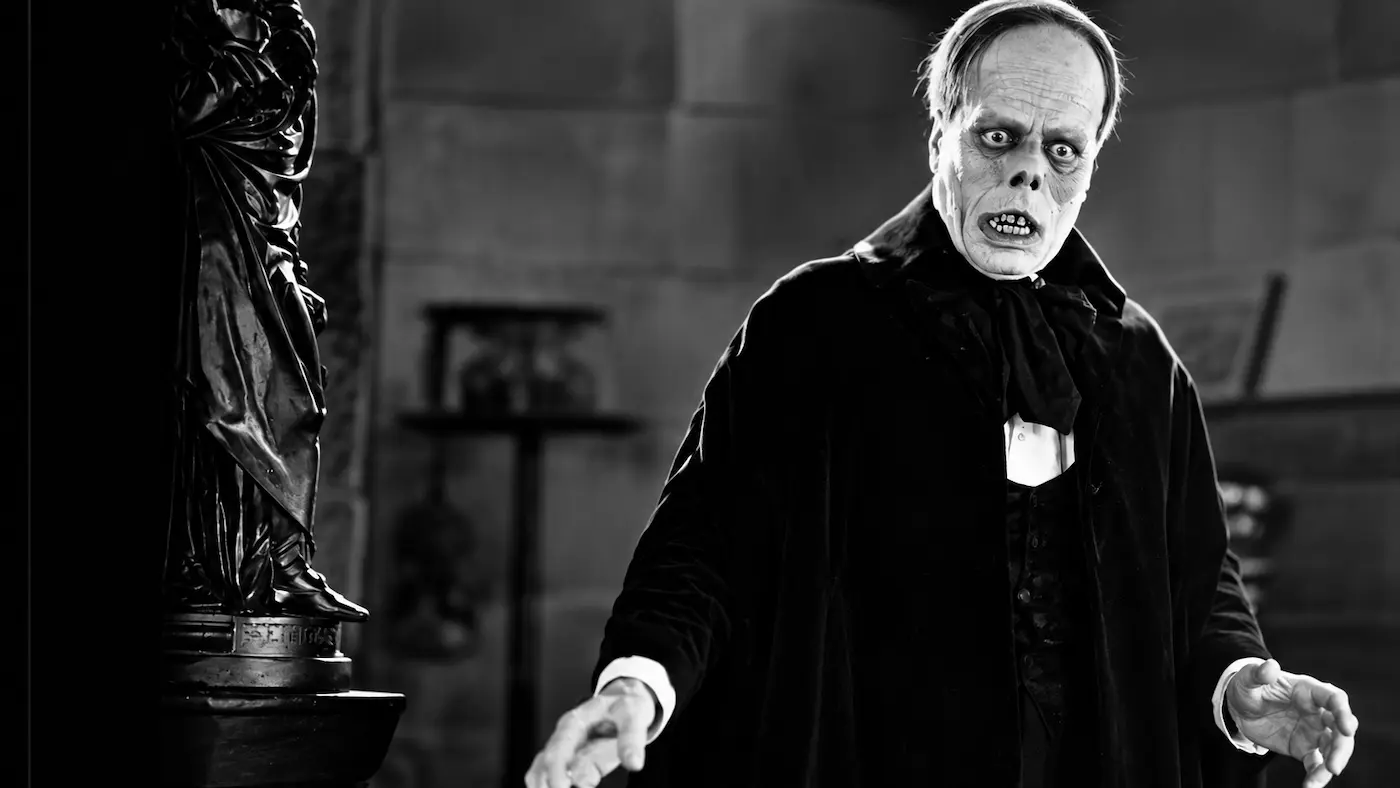
Indeed, Leroux’s novel depicts the Phantom as a virtuoso vocalist and organist. That gift apparently let him mesmerize Christine to the point of controlling her. Beyond his talent, the Phantom also nursed a tragic misconception. He believed that winning Christine’s heart would somehow save him and bring out his better qualities.
To capture that longing, Lasky chose a short, melancholy theme by M. L. Lake, one of the prolific composers of the silent era. The theme returns whenever the Phantom expresses his feelings for Christine. That way, the audience hears his loneliness even when his actions frighten them.
When the Library Came Up Empty
Some moments in the film, however, demanded music no stock library could supply. Of these, Don Juan Triumphant posed the most unusual problem. In the story, it serves as the Phantom’s unfinished masterwork, which he has secretly labored over for decades. The film even shows a page of the manuscript. Since no period cue could stand in for a fictional genius’s life’s work, Lasky wrote it himself.
Specifically, he composed all the music for the scenes where the Phantom plays the organ. He also wrote the passage that follows right after Christine removes his mask. Writing both pieces then gave him the material he needed to make the sequence fit together.
Likewise, Carlotta needed her own treatment. The fiery, temperamental prima donna storms into the managers’ office to torment them. Lasky felt she called for a very particular kind of music, so he wrote those cues too. Meanwhile, the Phantom arrives at the masked ball dressed as the Red Death. For that scene, Lasky made his own setting of the Dies Irae, the medieval chant for the Day of Judgment. Few melodies announce doom more efficiently, and besides, the Phantom never did care for subtle entrances.
What Is a Stock Cue?
During the silent era, publishers sold short pieces of music written for specific moods and screen actions. Theater musicians kept libraries of these cues and stitched them together for each new film. A modern editor pulling from a music library works much the same way.
The Unmasking, and the Tears That Follow
Without question, the scene where Christine pulls away the Phantom’s mask ranks among the most iconic moments ever filmed. Most viewers remember the shock of the reveal. Lasky, on the other hand, asks them to remember something quieter: the unmasking wounds the Phantom.
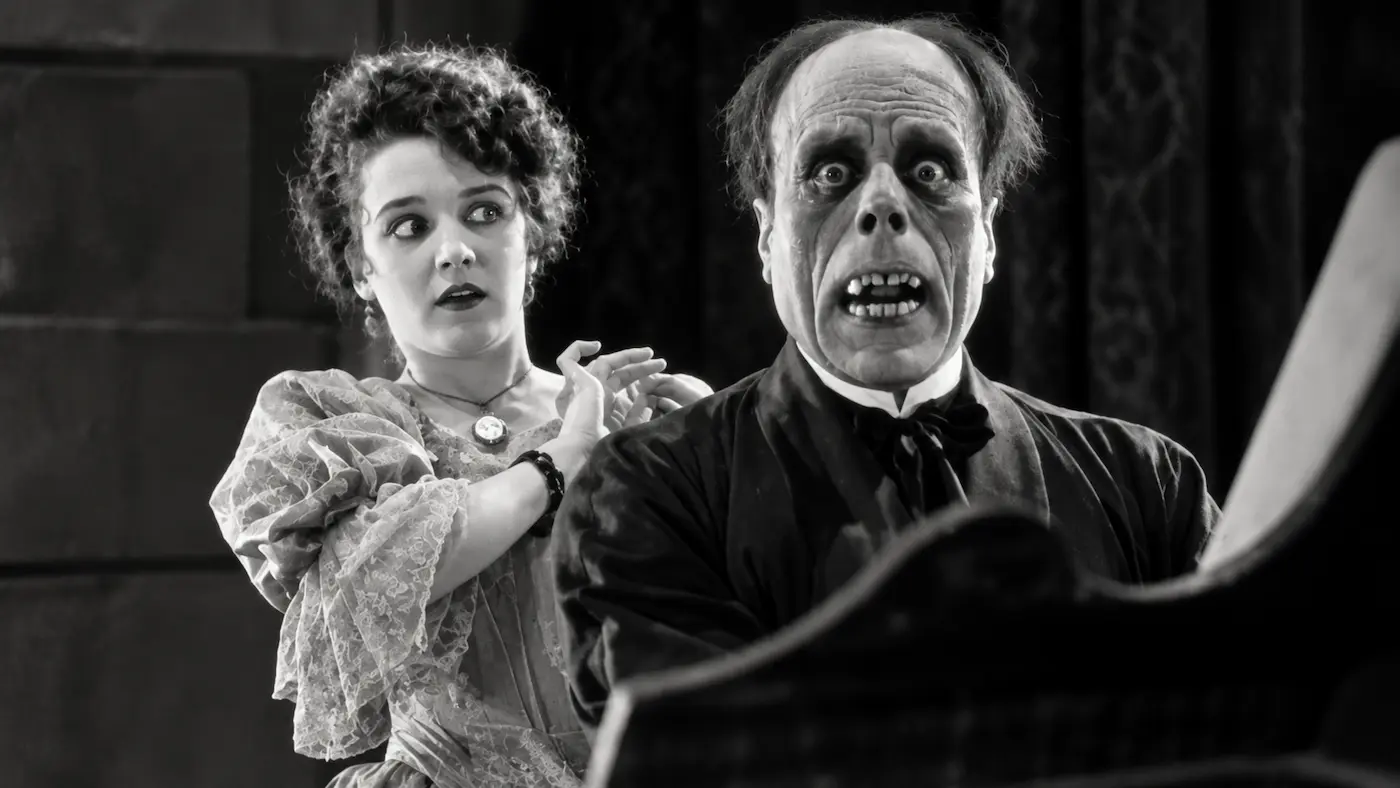
Earlier, the Phantom had warned her plainly. Everything would be fine, he told her, as long as she never touched the mask. He wanted to trust her. Lasky suspects the warning worked as a test the Phantom hoped she would pass. Of course, given her first chance, Christine removes it.
For this reason, Lasky urges viewers to watch what happens only a few moments later. The Phantom leans against the wall, crying, and Lon Chaney plays the moment with remarkable depth. “It’s truly superb,” Lasky says, “and I didn’t want this and some other important great moments in the film to be lost on the score.” Because generic horror music would bury that grief, Lasky scored the scene to let it register.
See It on the Big Screen
Reading about a score only gets you so far, so it helps to hear Lasky explain it himself. Audiences saw this video at the concert. In it, he talks through how he approached giving a silent film its voice. It runs just under nine minutes and makes a fine companion for anyone who wants more than the program notes.
Forty-Nine Cues in a Phantom of the Opera Score
Once Lasky knows a film well, he breaks it down into individual cues. He marks every point where new music should begin and end. In total, his Phantom of the Opera score contains 49 cues. Most of them came from period stock pieces in his collection. He also wrote several himself, including much of the connective music between cues.
The Score at a Glance
The film: The Phantom of the Opera (1925), directed by Rupert Julian and starring Lon Chaney
Total cues: 49
Primary source: Silent-era stock cues from Lasky’s personal collection, plus original cues he composed himself
The opera on stage: Charles Gounod’s Faust, restored well beyond its familiar ballet music
The Phantom’s theme: A short, melancholy melody by silent-era composer M. L. Lake
In practice, choosing music for a cue works like a mental funnel. First, Lasky runs through all the music he knows that might suit the scene. Within that catalog, a window of good candidates usually emerges. Next, he narrows it to a few stronger choices until one piece truly resonates with him. Ideally, that’s the piece that will “knock it out of the park.”
Sometimes, though, the search comes up empty, which Lasky admits can be frustrating. In those cases, he sits down and writes the cue himself, and he finds that route is sometimes much easier. He jokingly calls it cheating, yet he makes no apologies for it.
“At the end of the day, what really matters is that we have a good score that serves the picture.”Scott Lasky
Ultimately, that principle runs through every choice Lasky made. A century after Lon Chaney first stepped out of the shadows, Lasky’s score lets the Phantom be what Leroux imagined. He remains a criminal and a musician, but above all a creature of the opera house he haunts.