

Handel’s Water Music: The Night a King Floated Down the Thames
Liner Notes From the Archive
2018-2019 Season
Handel’s Water Music: The Night a King Floated Down the Thames
In July 1717, King George I floated down the Thames while fifty musicians played new music by Handel. The king loved it so much, he heard it three times.
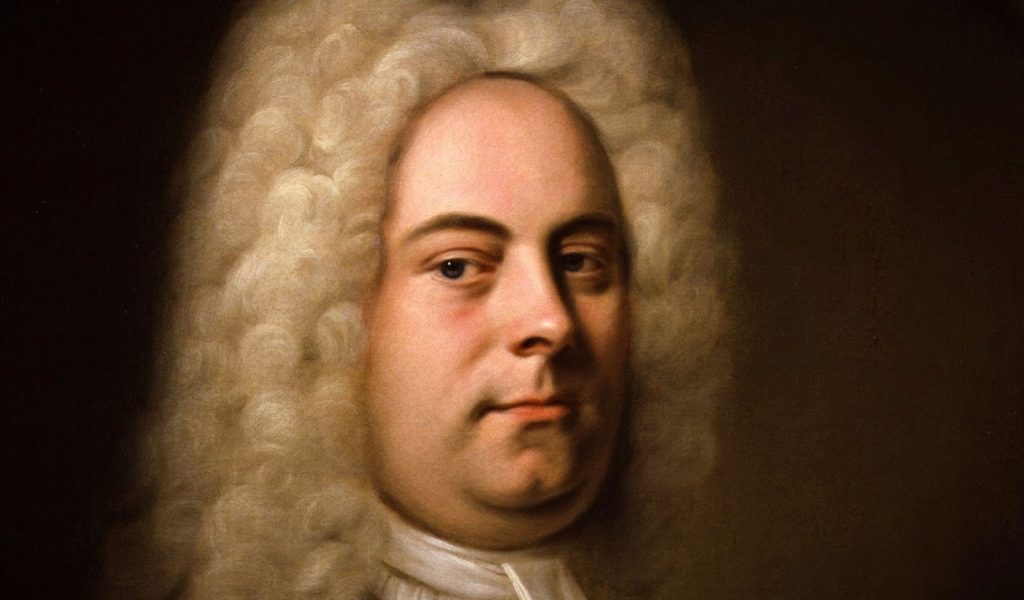
On a warm summer evening in July 1717, King George I climbed into an open barge at Whitehall and set off up the River Thames. Right beside him floated a second barge carrying about fifty musicians. As the royal party drifted toward Chelsea, the orchestra played new music by George Frideric Handel. The king liked it so much that he asked to hear it again, and then again. That evening gave the world the Water Music, and it remains one of the most famous outdoor concerts ever held.
A German in London
Handel was born in Halle, Germany, on February 23, 1685. Remarkably, Johann Sebastian Bach was born less than a month later, only about eighty miles away, although the two never met. Handel’s father, a barber-surgeon, wanted his son to become a lawyer. Nevertheless, the boy’s talent at the organ and harpsichord was impossible to ignore. By his early twenties, he had moved to Italy, where he mastered the Italian opera style that would later make him famous.
In 1710, Handel became Kapellmeister, or music director, to Georg Ludwig, the Elector of Hanover. Soon after, however, he left for London and made himself at home there. Then history took an unusual turn. In 1714, his former employer inherited the British throne and became King George I. Handel’s old boss was now his new king.
Over the next four decades, Handel built a remarkable career in London. He wrote dozens of Italian operas, and later turned to English oratorios such as Messiah, which premiered in Dublin in 1742. He also composed anthems, organ concertos and music for royal occasions. In 1727, he became a naturalized British subject.
The king liked it so much that he asked to hear it again, and then again.
The Concert on the Thames
The Water Music premiered on July 17, 1717, at the king’s request. According to an account by the Prussian diplomat Friedrich Bonet, George I enjoyed the music so much that he had it played three times. Each performance lasted about an hour. The orchestra played twice before the royal party stopped at Chelsea for supper, and once more on the trip back, which began after two in the morning. Clearly, the musicians earned their pay that night.
Why did the king want a river concert at all? Historians still debate it. Some suggest George wanted to outshine his son, the Prince of Wales, whose popularity was growing. Others think he hoped to improve his public image during a period of political unrest. A popular story claims Handel wrote the music to win back the favor of a king he had abandoned in Hanover. Unfortunately, that tale is almost certainly too good to be true. Either way, the music outlasted every theory about it.
The Music Itself
The Water Music is a collection of short orchestral movements, usually published today as three suites. Most of them are dances, including minuets, bourrées and hornpipes. Handel also wrote with the outdoors in mind. Strings and delicate instruments can vanish over open water, so he leaned on trumpets and horns, which carry across a river. In fact, horns were still a novelty in English orchestras at the time.
The three suites each have their own character. The first, in F major, is the largest and features the horns. The second, in D major, is the brightest, with trumpets added for ceremonial shine. The third, in G major, is the most intimate, built around flutes and recorders, and was probably meant for the quieter supper hours.
Fun Fact: A Song for Every King
Ten years after the river concert, Handel received an even grander commission. In 1727, he wrote four anthems for the coronation of King George II at Westminster Abbey. One of them, Zadok the Priest, has been performed at every British coronation since, including the coronation of King Charles III in 2023. Few composers can claim a tune that has crowned nearly three centuries of monarchs.
Handel’s Legacy
Handel died in London on April 14, 1759, at the age of 74. He was buried in Westminster Abbey, an honor that reflected how completely Britain had adopted him. Today, his house on Brook Street in London is a museum. Oddly enough, it shares the site with the former home of Jimi Hendrix, who lived next door more than two hundred years later.
The La Mirada Symphony performed selected works by Handel at The Old Masters Revisited on February 24, 2019. Fortunately, his music needs no barge to make an impression. Still, it is fun to imagine that summer night on the Thames, with a king asking the orchestra to play it one more time.
Keep Reading

Oct 5, 2026
Why Does Music Give You Goosebumps?

Sep 28, 2026
Why Did Russian Composers Become Obsessed With Spain?

Sep 21, 2026