

Bach’s Brandenburg Concertos: The Job Application That Never Got an Answer
Liner Notes From the Archive
2018-2019 Season
Bach’s Brandenburg Concertos: The Job Application That Never Got an Answer
In 1721, Johann Sebastian Bach sent six of his finest concertos to a German margrave in hopes of landing a new job, and he never heard back. Here is the story of the composer behind the Brandenburg Concertos and how his unanswered letter ended up in space.
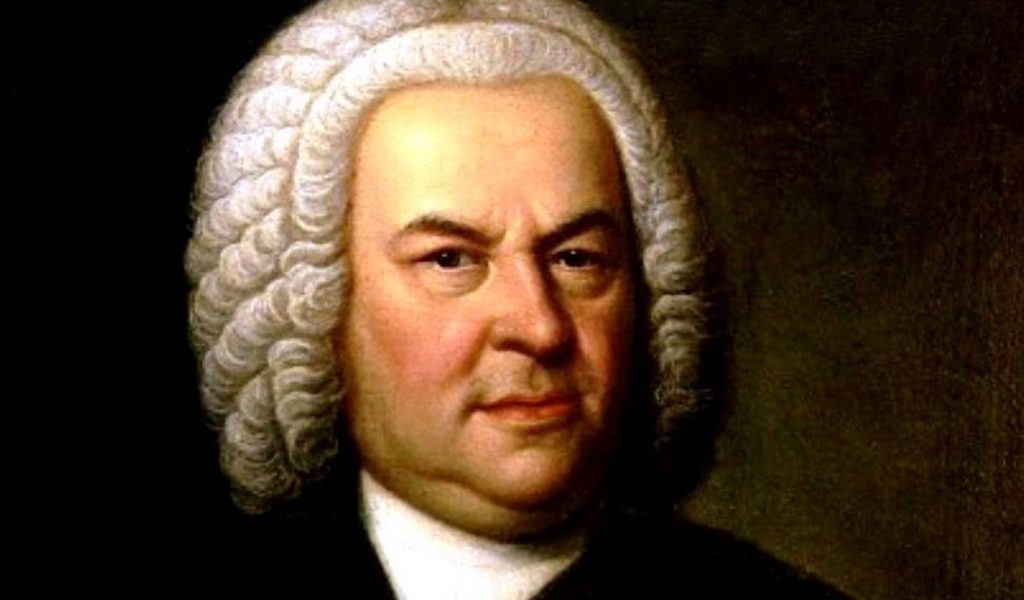
On March 24, 1721, the music director of a small German court signed a dedication in elaborate, slightly shaky French. The manuscript behind it held six concertos, copied almost entirely in his own hand. He addressed it to Christian Ludwig, the Margrave of Brandenburg-Schwedt. In practical terms, it was a very expensive résumé. However, the margrave never paid for it, and nobody knows whether he heard a note. The composer was Johann Sebastian Bach, and those Brandenburg Concertos now rank among the Baroque era’s greatest orchestral music.
A Family Business
Bach was born in Eisenach, in central Germany, on March 21, 1685. He was the eighth and youngest child of Johann Ambrosius Bach, a town musician. For generations, his family had supplied church organists and court musicians to the region. In fact, the name Bach reportedly became local shorthand for “musician” in parts of Thuringia. That must have made career day at school very short.
However, his family’s good fortune ran out early. His mother died in 1694, and his father died less than a year later. As a result, Johann Sebastian became an orphan before his tenth birthday. He moved in with his eldest brother, Johann Christoph, an organist in Ohrdruf, who continued the boy’s musical training.
According to a family story, the boy craved his brother’s locked-away collection of keyboard music. So he copied it by moonlight over six months, only to lose the copy when he was caught. Whether or not every detail holds up, the story says a lot about the student he was.
At 15, Bach left for Lüneburg, nearly 200 miles to the north. There he earned a place as a choral scholar at St. Michael’s School. He sang in the choir and absorbed the work of northern Germany’s great organists. Over the following decades, he blended those German traditions with styles from Italy and France. Meanwhile, his command of counterpoint became the standard that later composers would measure themselves against.
A Long Walk and a Short Jail Sentence
Bach’s early career took him through a series of church and court posts. He did not always make life easy for his employers, either. In 1705, while serving as organist in Arnstadt, he received four weeks of leave. He planned to travel to Lübeck and hear the celebrated organist Dieterich Buxtehude. He walked more than 200 miles to get there, and then he stayed about four months. Unsurprisingly, his employers in Arnstadt noticed.
Later, in Weimar, he served Duke Wilhelm Ernst as court organist and concertmaster. In 1717, Bach accepted a better job in Köthen and pressed hard to be released. In response, the duke had him locked up for nearly a month. Bach finally walked free on December 2, after one of music history’s stranger exit interviews.
The Köthen Years
At Köthen, Bach finally found an employer who loved music. Prince Leopold was a capable amateur musician himself, and he kept a skilled court orchestra. His court followed the Reformed faith, which used little elaborate church music. Therefore, Bach’s duties centered on instrumental works. Many of his greatest instrumental pieces date from these years. They include the sonatas and partitas for solo violin and the first book of The Well-Tempered Clavier.
The year 1719 brought two encounters that shaped his story in very different ways. First, Bach traveled to Berlin to buy a new harpsichord for the court. While there, he played for Christian Ludwig, the Margrave of Brandenburg. Months later, he heard that George Frideric Handel was visiting his hometown of Halle, about 20 miles from Köthen.
The two composers had been born less than a month apart in 1685, about 80 miles from each other. By then, Handel had become a star in London. Bach set out to meet him but arrived after Handel had already left. It was the closest the two greatest composers of their generation ever came to sharing a room.
These years also brought real loss. In 1720, his wife Maria Barbara died suddenly while he was traveling with the prince. The following year he married the singer Anna Magdalena Wilcke. Across both marriages, Bach fathered 20 children, and about half of them survived to adulthood.
The margrave never paid for it, and nobody knows whether he ever heard a note.
How Bach Pitched the Brandenburg Concertos
The margrave had enjoyed Bach’s playing in Berlin and asked to see some of his music. Two years later, Bach delivered, although not with brand-new work. Instead, he gathered six of the finest concertos he had already written. Then he polished them into a lavish presentation set. Many historians read the gift as a quiet bid for a new position.
If so, the bid went nowhere. The margrave never paid for the music, and the reasons remain unclear. His modest ensemble probably lacked the players to perform it. Consequently, the concertos most likely never sounded in Brandenburg at all. After Christian Ludwig died in 1734, the manuscript dropped out of sight. The scholar Siegfried Wilhelm Dehn rediscovered it in 1849, and the concertos reached print the next year. Today the original score belongs to the Berlin State Library.
Each concerto calls for its own unusual combination of instruments. Together, the set shows off what a Baroque orchestra could do. The First features a pair of hunting horns. The Second sends a high trumpet soaring alongside recorder, oboe and violin. The Fifth hands the harpsichord a long solo cadenza, an early ancestor of the keyboard concerto. Meanwhile, the Sixth leaves out the violins entirely and lets the lower strings carry the music.
The Leipzig Years
In 1723, Bach became Thomaskantor in Leipzig. He directed music for the city’s main Lutheran churches and taught at the St. Thomas School. He stayed for the rest of his life, producing an enormous body of sacred music. That output includes hundreds of cantatas and the St. Matthew Passion.
In 1729, Bach heard that Handel was once again visiting Halle. This time, however, he was too ill to travel. Instead, he sent his eldest son, Wilhelm Friedemann, with an invitation to Leipzig. Handel did not come, and the two men never got another chance.
Oddly enough, they did end up sharing one connection. By 1750, Bach’s eyesight was failing badly. He turned to John Taylor, a traveling English eye surgeon who operated on him twice. The surgeries failed, and Bach died in Leipzig on July 28, 1750, at the age of 65. Taylor is also reported to have treated Handel later in the decade, with no better results. So the two composers who never met may have passed through the same pair of hands.
The Long Silence and the Revival
For decades after his death, much of Bach’s music faded from public life. Mostly, fellow musicians kept studying it in private. That changed in 1829, when 20-year-old Felix Mendelssohn conducted the St. Matthew Passion in Berlin. His performance set off a revival that never slowed down.
The Brandenburg Concertos took longer to find their audience. Eventually, though, they traveled farther than anything else Bach wrote. In 1977, NASA placed the first movement of Brandenburg Concerto No. 2 on the Voyager Golden Record. Coincidentally, that was the same year the La Mirada Theatre for the Performing Arts opened its doors. The margrave may have ignored Bach’s résumé. Still, it is now drifting beyond the edge of the solar system, waiting for a reply.
The La Mirada Symphony performed selected works by Bach at The Old Masters Revisited on February 24, 2019. That program also honored his near-neighbor Handel. Nearly three centuries after that unanswered letter, Bach still has no trouble finding an audience.
Keep Reading
Oct 26, 2026
Putting the Opera Back in The Phantom of the Opera
Oct 5, 2026
Why Does Music Give You Goosebumps?
Sep 28, 2026