

What Happens When You Hear an Orchestra Live?
We can stream nearly any piece of music ever recorded within seconds, yet something changes when the musicians sit right in front of us.
Music has never been easier to reach. A phone in your pocket can pull up Beethoven on your commute or drop a world-class orchestra straight into your living room, no ticket required.
The technology behind that convenience is genuinely impressive: a good pair of headphones can now catch details a listener a generation ago would have missed entirely. But walk into a concert hall and let the orchestra begin, and something in the room shifts. It isn’t simply a matter of volume; it’s a different kind of experience altogether.
So what actually happens when music happens live, right in front of you?
A Recording Reproduces Sound. A Performance Creates It
When you listen to a recording, you’re hearing something that already happened, a performance captured by microphones, balanced by engineers, and handed back to you as a finished, unchangeable object.
A live performance is still being made while you sit there. A timpani strike shoves the air in the room before the sound has even finished its short trip to your seat, and a few yards away a bow rasps against a string while the brass and strings above it knit themselves into a wall of vibration that no pair of speakers could ever rebuild.
The room itself becomes part of the instrument. Every hall answers the orchestra a little differently, softening a phrase in one corner and throwing it back sharper in another, and even a packed house of listeners can change how the space carries sound. You don’t really listen to an orchestra so much as sit inside whatever it happens to be making that night.
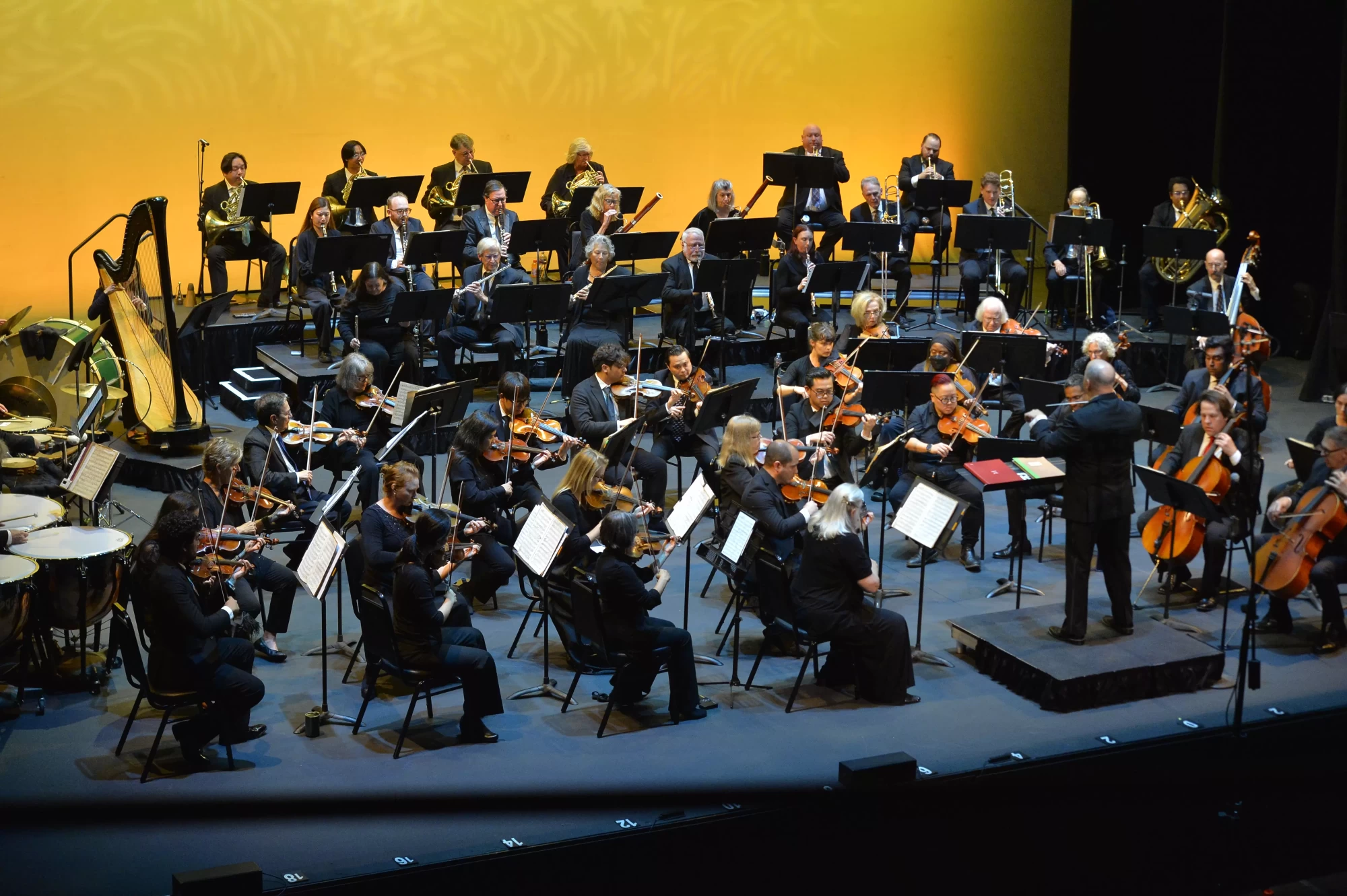
The Body Hears Music, Too
We tend to think of listening as a job for the ears alone, but live music turns into something your whole body registers. Low frequencies travel up through the floor and the seat beneath you, so a bass drum can land in your chest almost before your ear has caught up with it, and a full brass section can flood a hall with enough pressure that the sound seems to come from every direction at once.
Then the orchestra does the opposite, and it’s just as physical: dozens of musicians shrink down together into something almost impossibly quiet. That contrast is the whole point. On a recording, you control the volume yourself. In a concert hall, the orchestra controls it for you, and the distance between a whisper and a wall of sound becomes enormous.
A live performance is still being made while you sit there.Music happening in real time
The Ingredient No Recording Can Capture: Risk
Maybe the most interesting thing about a live performance is that nobody involved, not even the musicians playing it, knows exactly what’s about to happen. They’ve rehearsed for weeks, the conductor has prepared every cue, and everyone onstage knows the score cold, but the performance still has to happen right now, in this room, with no way to rewind and try it again.
A phrase might bend slightly differently than it did the night before. A conductor might let a silence stretch a beat longer than planned, testing how long the room can hold it. A section might suddenly lock together in a way that feels more instinctive than rehearsed. None of these moments is dramatic on its own, but together they make every performance unrepeatable.
That unrepeatability is a real part of what makes a concert worth showing up for. The audience isn’t watching musicians reproduce something finished. They’re watching people build it together, live, with the outcome still genuinely up for grabs.
Silence Becomes Part of the Music
One of the most powerful moments at a concert happens before anyone plays a single note. The musicians settle into position, the audience quiets down, and the conductor raises a hand; in that instant, a room full of strangers goes silent together, hundreds of separate attentions suddenly pointed at the same spot on the stage.
That kind of shared, deliberate silence has become surprisingly rare in everyday life. A concert asks something almost old-fashioned of the people sitting in it: listen, and nothing else.
An Orchestra Is Surprisingly Human
From a distance, an orchestra can look almost mechanical, dozens of people reading identical sheet music and following the same hand. Look closer, though, and something far more human comes into focus.
Every musician onstage makes hundreds of small decisions as the piece unfolds, listening past their own part to everyone else’s, adjusting a breath or a bow speed to match a neighbor they can barely see out of the corner of their eye.
No single player can produce the sound of an orchestra alone, no matter how skilled they are; it only exists when everyone bends toward something larger than their individual part. That may be part of why orchestral music hits so differently when you hear it in person: you aren’t simply hearing music, you’re watching cooperation itself become audible.
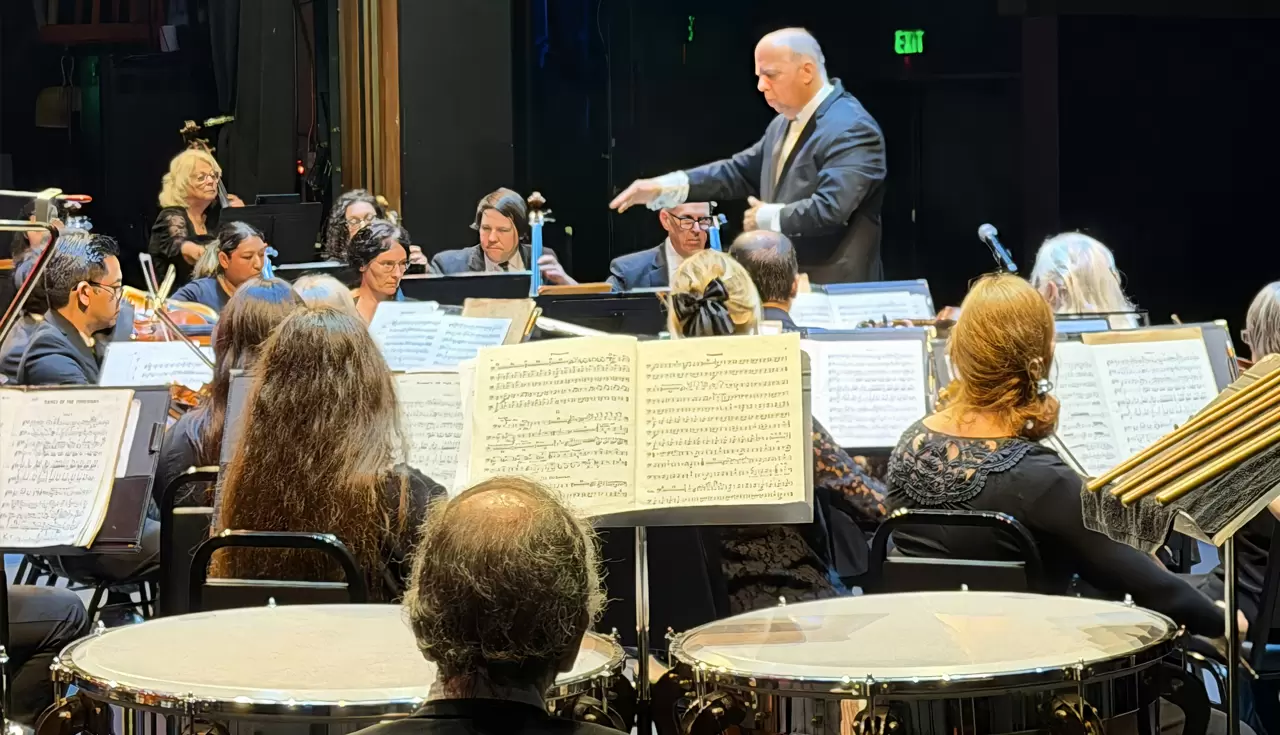
Something Happens in the Audience, Too
The musicians aren’t the only ones sharing this experience. Everyone sitting in the theater is too. Hundreds of strangers fall quiet at the same instant, recognize the same melody arriving, and lean forward together as a piece closes in on its final bars.
Researchers have actually measured this effect directly, finding that audience members’ heart rates and breathing can fall into sync during a live performance in a way that solitary listening never manages to produce. For an hour or two, a room full of strangers experiences the same thing at the same moment, and that shared experience feels rarer than it used to.
Most of what we listen to now is built around us as individuals. Algorithms guess at what we’ll enjoy, and every streaming feed quietly looks a little different from the one running next to it. A concert hall works on the opposite logic entirely: everyone in the room hears the same performance at the same time, and once it ends, that exact performance is gone for good, never to happen in quite that way again.
You aren’t simply hearing music. You’re watching cooperation become audible.An orchestra is surprisingly human
You Don’t Need to Know Classical Music to Feel It
Some people put off going to a classical concert because they assume they need to understand the music first. They don’t. You don’t have to name the composer, know the terminology, or catch every single entrance to get something real out of an evening like this; showing up and paying attention is genuinely enough.
If anything, hearing an orchestra live might be one of the easiest ways into classical music, because you get to watch the sound being made instead of just hearing it arrive out of nowhere. A melody passes from the violins over to the woodwinds, and a trumpet suddenly cuts up through the texture and briefly takes over the room. Once you can see those handoffs happening in front of you, music that once felt distant starts to feel immediate instead.
Watch the sound move through the orchestra.
- A melody passing from the strings to the woodwinds.
- The physical impact of the bass drum, timpani and low brass.
- A sudden shift from a whisper to a full-orchestra wall of sound.
- The silence immediately before the conductor gives the first cue.
- Musicians adjusting to one another in real time.
- The audience becoming quiet, attentive and responsive together.
- The final resonance hanging in the hall after the last note ends.
The Best Way to Understand It Is to Hear It
A recording can preserve a remarkable performance, and headphones can reveal detail that nobody would have caught a generation ago. Streaming has put entire musical libraries within reach of almost anyone. None of that diminishes live music in the slightest; if anything, it just gives more people a way in.
But something still happens when musicians take a stage, an audience settles into a room, and everyone waits together for that first note to land. The air actually moves, the room answers back, and for a couple of hours a few hundred strangers become a single audience. That’s genuinely hard to get out of a speaker, no matter how good the speaker is.
Fortunately, you don’t have to settle for the speaker.
Experience the La Mirada Symphony in Person
The La Mirada Symphony presents live orchestral performances at the La Mirada Theatre for the Performing Arts, and the concerts are offered free to the community.
Come hear one for yourself, and decide what live music actually gives you that a recording never could.
Explore the 2026–2027 Season