

How Did a Russian Composer Make an Orchestra Sound Like Spain?
Sixteen minutes of castanets, dazzling solos, and some of the most colorful orchestral music ever written. Welcome to Rimsky-Korsakov’s Capriccio Espagnol.
Close your eyes when Rimsky-Korsakov’s Capriccio Espagnol begins, and Spain rises up around you, unmistakable and vivid, as if the concert hall itself had been transported somewhere warmer.
The orchestra bursts to life all at once. Woodwinds race through bright, sun-drenched melodies while violins flash across the texture. Brass instruments answer with fanfares sharp enough to cut through the noise of a crowded plaza. Somewhere underneath it all, castanets snap out that unmistakable Spanish accent. Within seconds, the entire orchestra sounds like it has wandered into the middle of a celebration it didn’t plan on missing.
There’s just one problem with that picture. The composer sitting at his desk in St. Petersburg, imagining all of it, was Russian.
Nikolai Rimsky-Korsakov wrote Capriccio Espagnol in 1887. Nearly a century and a half later, it still stands as one of classical music’s most vivid portraits of a country its composer barely knew firsthand. The piece tells us as much about Rimsky-Korsakov’s own imagination as it does about Spain, because he wasn’t borrowing pretty melodies and dressing them up. He was teaching an orchestra how to shimmer, how to roar, how to dance. He was teaching it how to change its mood in the space of a single measure.
More than a hundred years on, that trick still works. Walk into a concert hall the moment Capriccio Espagnol begins, and you can feel the room shift.
So how did a Russian composer, writing thousands of miles from Andalusia, manage to make music that sounds this convincingly Spanish?
A Russian Composer Looks Toward Spain
Rimsky-Korsakov came up among a generation of Russian composers who refused to stay inside the concert hall for their ideas. They went looking elsewhere, out past the symphonies and sonatas everyone already knew. They went toward folk melodies nobody had written down properly, toward rhythms that didn’t behave the way a German textbook said rhythms should behave. That restlessness opened up an entire world worth exploring, and it shaped everything Rimsky-Korsakov would go on to write.
Spain, in particular, cast a spell over European composers all through the 19th century. Something about its dances refused to sit still the way Austrian waltzes did. Its folk traditions carried a heat and an unpredictability that the German and Austrian styles dominating concert music didn’t have. Composers who’d never set foot on Spanish soil kept finding themselves drawn back to it anyway.
Rimsky-Korsakov was one of them. He took Spanish folk melodies and ran them through his own imagination, reshaping them with an ear for orchestral color that few of his contemporaries could match. It’s the same gift Britannica credits as the defining trait of his career: descriptive orchestration that could suggest a mood or a place almost on its own.
One Soloist Becomes an Entire Orchestra
The piece almost turned out completely different. He originally set out to write a fantasy on Spanish themes for violin and orchestra, the kind of showpiece built to spotlight a single virtuoso soloist. But somewhere in the sketching, the idea outgrew itself. Rimsky-Korsakov stopped imagining one soloist standing in front of the ensemble and started imagining the entire orchestra as the soloist. That single shift in thinking changed everything about what the piece could be.
What emerged instead of a conventional concerto was Capriccio Espagnol, five connected movements built from instrumental solos, sudden bursts of color and rhythm that never lets up for long. Rimsky-Korsakov conducted the premiere himself in St. Petersburg in October 1887. From the opening bar, the piece makes clear it isn’t interested in a slow introduction.
The orchestral colors aren’t decoration. The colors are the music.Rimsky-Korsakov · Capriccio Espagnol
The Sun Comes Up Fast
Capriccio Espagnol opens with an Alborada, a traditional morning song tied to daybreak. Don’t expect a peaceful sunrise, though. Rimsky-Korsakov throws open the curtains.
The orchestra launches into a bright, fast-moving melody charged with celebration from the first bar. The music doesn’t slowly wake up; it arrives fully awake.
Then Rimsky-Korsakov starts moving your attention around the orchestra. A clarinet emerges. A violin takes the spotlight. Sections answer one another, and melodies that seem simple at first grow exciting purely through their shifting instrumental colors.
That’s one of the great pleasures of this piece. The melody matters, but so does who’s playing it. Rimsky-Korsakov wants you to hear the personalities inside the orchestra.
The Orchestra Becomes the Star
Picture two painters drawing the same object. Each can completely change its mood through color, texture, shadow, and light alone. Rimsky-Korsakov worked the same way with sound.
He built his reputation on orchestration: the art of deciding how instruments and instrumental combinations shape the sound of a piece. However, calling orchestration a matter of “which instrument plays what” undersells what happens in Capriccio Espagnol. Here, the orchestral colors aren’t decoration layered on after the music is written. The colors are the music.
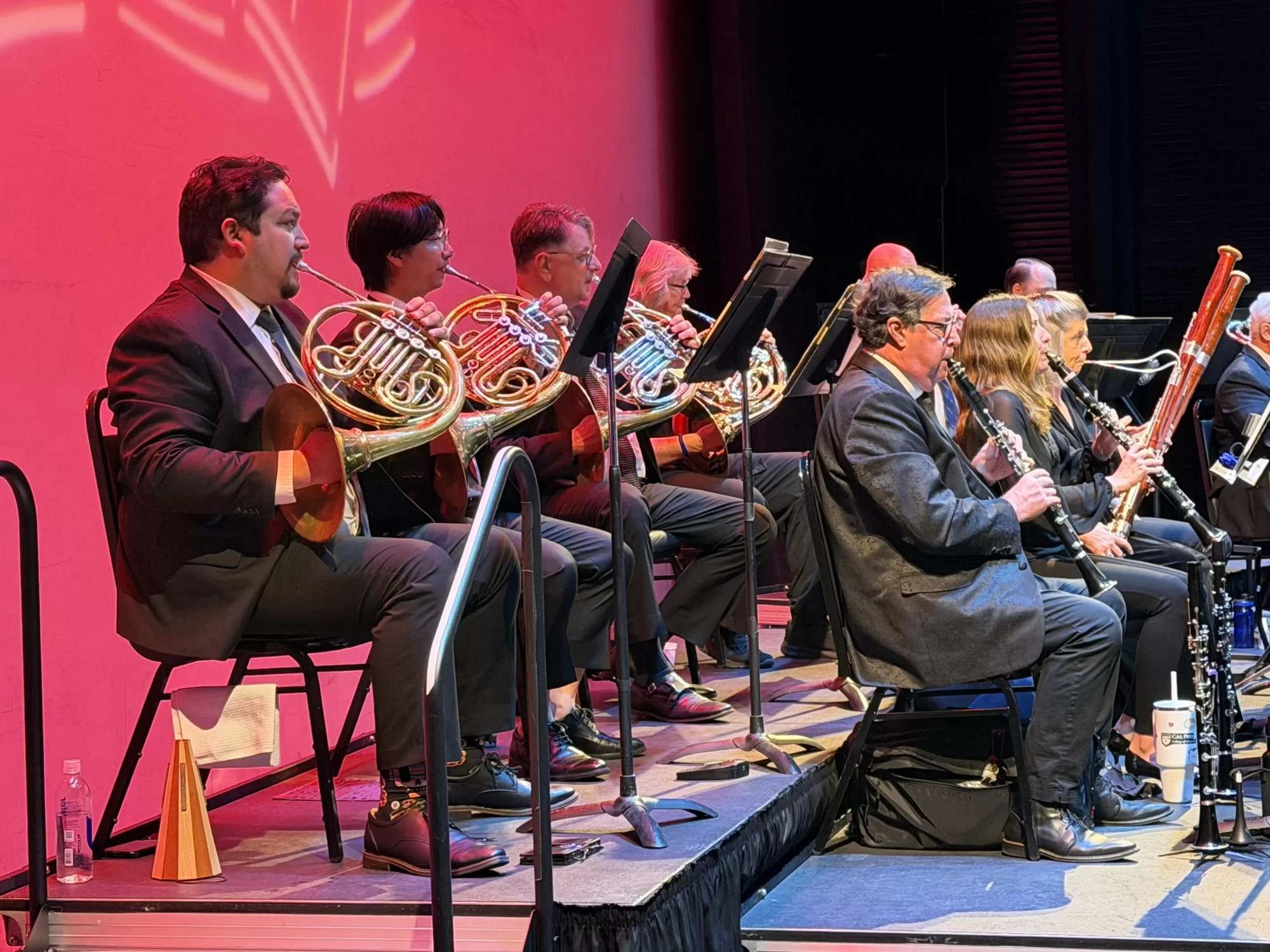
Rimsky-Korsakov calls on piccolo, flutes, oboes, English horn, clarinets, bassoons, horns, trumpets, trombones and tuba. He adds harp and strings, then brings in percussion, including triangle, cymbals, tambourine and, fittingly, castanets.
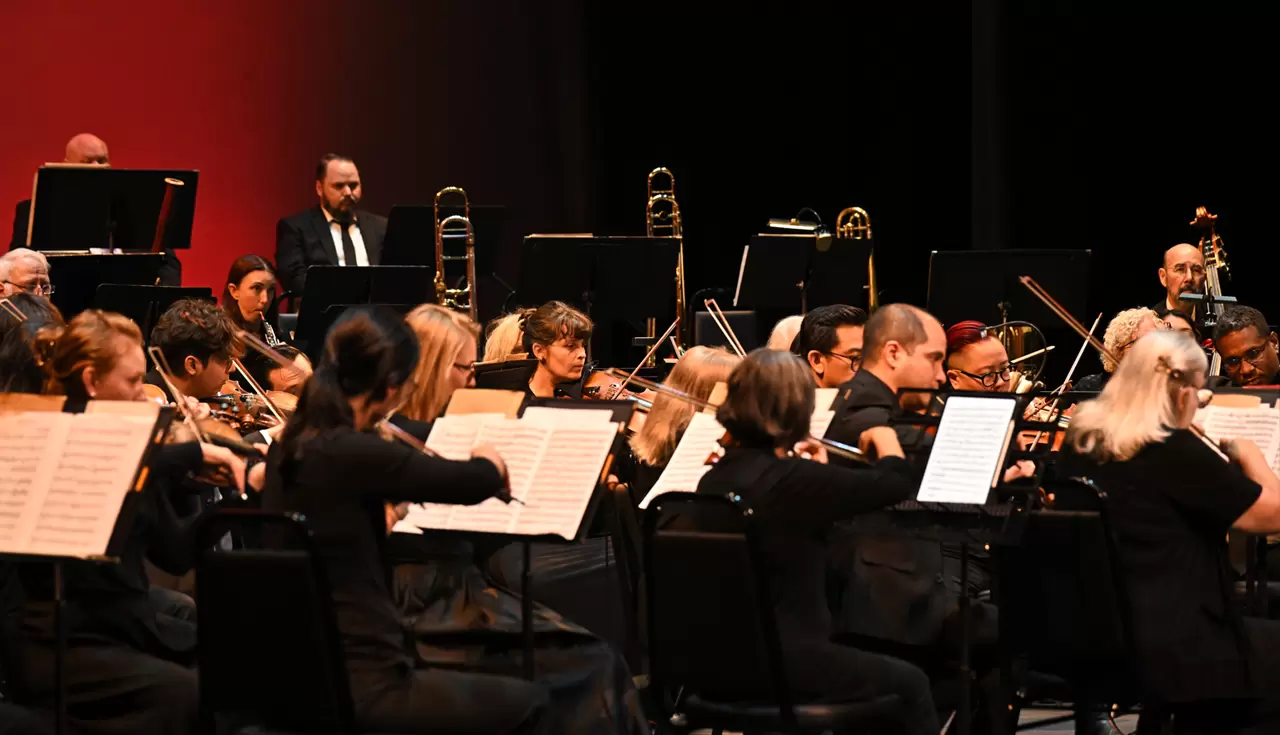
He never throws all those sounds together at once, though. Instead, he keeps changing the combinations. One moment feels intimate; the next opens into brilliant orchestral color. A solo instrument steps forward, then disappears back into the ensemble as another voice emerges somewhere else. The effect can feel almost cinematic. Rimsky-Korsakov was pulling it off long before film composers used an orchestra to transport audiences to distant places.
Five Stops on a Musical Journey
Rimsky-Korsakov shaped Capriccio Espagnol as a journey in five stops: Alborada, Variazioni, a second Alborada, Scena e canto gitano, and Fandango asturiano, each one handing the story off to the next.
The opening Alborada throws the doors open and gets the blood moving. The Variazioni arrives like a change of light, easing the pace and giving the music room to think. When the Alborada comes back around, it isn’t a rerun. Rimsky-Korsakov reaches for a different set of instrumental colors the second time, so material your ear already knows arrives sounding freshly discovered.
Then comes the richest stretch of the whole piece, the Scena e canto gitano, where the orchestra stops behaving like one unified machine and starts behaving like a room full of individual voices waiting their turn to talk. A violin breaks off on a path of its own. The harp changes the temperature in the room. Percussion drops in a new color, and somewhere in the middle of it all, instruments seem to be answering each other the way people do mid-conversation. Eventually those wandering threads find their way back to each other, and the orchestra reassembles.
Rimsky-Korsakov saves the fireworks for last. The Fandango asturiano isn’t interested in holding back. Earlier melodies resurface, the rhythm turns downright contagious, and the full orchestra charges toward an ending built to leave you a little breathless in your seat.
You Don’t Need Music Theory to Hear It
Classical music carries an unfortunate reputation problem. Somewhere along the way, people got the idea that you need a music degree in hand before you’re allowed to enjoy it, that you have to recognize sonata form or catch every key change or you’re doing it wrong.
Forget all of that. Capriccio Espagnol doesn’t ask for credentials. It just asks you to follow the sound.
Pay attention to where your ear wanders as you listen. Some instrument will suddenly steal your focus without warning. The music will brighten, almost visibly, then pull back again. The orchestra will swell until it fills the entire room, then narrow itself down to a single voice standing alone.
Follow the colors.
- The opening Alborada bursting into life.
- The violin suddenly behaving like a soloist.
- Castanets and percussion changing the atmosphere.
- Solo instruments passing musical ideas around the orchestra.
- The harp briefly changing the texture and temperature of the music.
- The increasingly wild momentum of the final Fandango.
- The moment the entire orchestra finally seems to cut loose.
Once you start hunting for those details, something shifts. The orchestra stops registering as one large group playing together, and you start hearing the individuals inside it instead, each one with a personality of their own. That shift in listening doesn’t stay contained to this piece either. It tends to follow you into every other orchestral work you hear after.
Spain Through Someone Else’s Imagination
Rimsky-Korsakov’s Capriccio Espagnol isn’t Spanish music so much as a Russian composer’s interpretation of Spanish material, and that distinction places the piece inside a much larger musical story.
Throughout the 19th and early 20th centuries, composers routinely looked beyond their own borders for inspiration. They absorbed folk songs, dances, rhythms and traditions, then filtered them through their own musical language. Spain proved especially irresistible. French composers looked toward Spain. Russian composers looked toward Spain. Eventually, Spanish composers brought their own traditions into the concert hall with tremendous force.
As a result, “Spain” in classical music became a real place, a set of musical traditions and an imaginative destination all at once. Rimsky-Korsakov’s Spain explodes with color, and that’s exactly why Capriccio Espagnol still holds up as pure fun. He isn’t giving us a geography lesson. He’s taking us somewhere.
He isn’t giving us a geography lesson. He’s taking us somewhere.Sixteen minutes somewhere else
Sixteen Minutes Somewhere Else
That’s one of the remarkable things music can do. You don’t need scenery, costumes or a screen to tell you where the story takes place. The orchestra creates the world on its own.
In Capriccio Espagnol, a few notes can suggest morning. Castanets can shift the atmosphere of an entire concert hall. A violin can suddenly sound like a character walking into the story, while brass and percussion transform that same room into something enormous. Rimsky-Korsakov pulls off the whole journey in roughly sixteen minutes.
If you’ve never heard the piece before, don’t worry about studying it first. Just let it take you somewhere.
Hear Rimsky-Korsakov’s Capriccio Espagnol Live
This season, the La Mirada Symphony brings Capriccio Espagnol to the stage as part of Sketches of Spain, a concert exploring Spain’s irresistible pull on orchestral music.
The program travels through different composers, countries, and ways of imagining Spanish sound, pairing Rimsky-Korsakov with music by Mikhail Glinka, Enrique Granados, Joaquín Rodrigo, and Georges Bizet as part of the Symphony’s 2026–2027 concert season.
When Capriccio Espagnol begins, though, listen for something beyond Spain. Listen to the orchestra itself. Watch individual musicians step forward and disappear again. Hear the colors shift from one section to the next. Then notice how a Russian composer, writing more than a century ago, uses nothing but sound to convince us we’ve traveled somewhere else.
Explore Sketches of Spain