
Why Learning an Instrument Changes the Way a Child Hears the World
Learning music doesn’t simply teach a child how to make sound. Research suggests it may change how they listen to music, language, and the complicated world happening around them.
Begin with a child, not with research. A child picks up a violin, a clarinet, a trumpet, or a guitar for the first time. The goal seems almost absurdly simple: make a sound. Then something shifts. The child discovers that making a sound isn’t enough. Is it the right note? Is it in tune? Did it start at the right moment? Was it too loud? What is the person next to them playing? Where is the beat, and why did the conductor just stop everyone cold? Before long, the child isn’t only making music. The child is learning how to listen, and that shift is the doorway into everything that follows.
Scientists have spent years trying to understand what happens during that process. Their findings don’t support the old idea that classical music magically makes children smarter. Instead, the research points toward something subtler, and arguably more interesting. Active music training asks a developing brain to become unusually attentive to sound.
Listening Is Something We Learn
Most of us treat hearing as something that happens to us. Sound enters the ear, so we hear it. But the world rarely offers sound in isolation, and it is relentlessly noisy. A child sitting in a classroom has to separate the teacher’s voice from the whispering of other students. Sounds are coming from the other side of the classroom door too. At a birthday party, that same child has to pick one voice out of a dozen competing at once. The auditory system is constantly deciding what deserves attention and what can fade into the background.
Music raises the stakes on that problem considerably. A young musician has to track pitch, rhythm, tone, and timing while also deciding, moment to moment, which sounds actually matter.
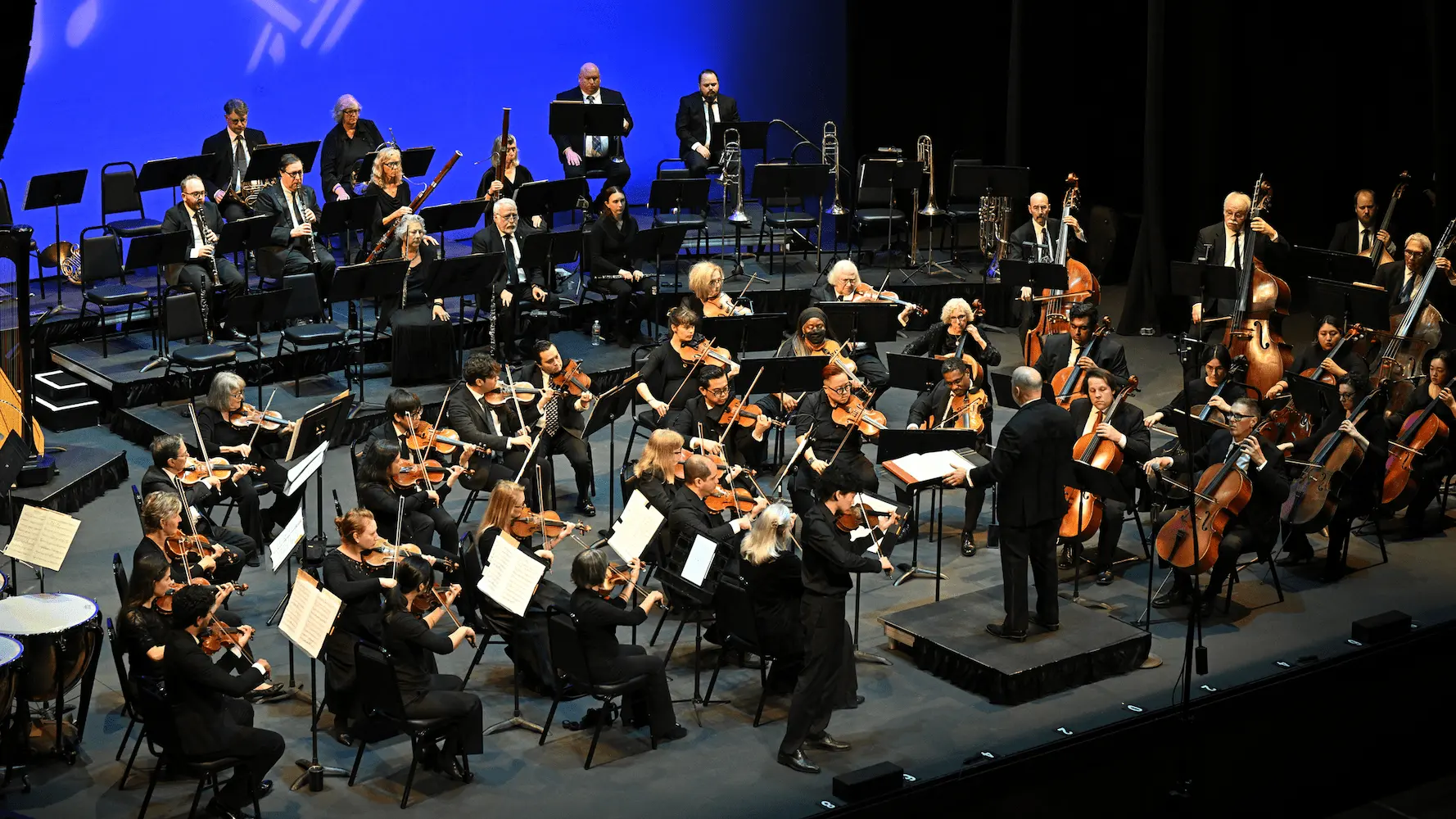
Picture a child playing second violin in a youth orchestra. Dozens of musicians are playing around them, yet the child has to follow a single part without losing track of it. At the same time, tuning everyone else out isn’t an option. Each performance depends on what the rest of the ensemble is doing. That contradiction sits at the center of what makes ensemble music so demanding. A musician learns to hear one thing clearly without ever fully stopping hearing everything else.
What Scientists Started Finding
That idea is worth testing against real evidence, and researchers have tried. One large systematic review and meta-analysis examined 62 longitudinal studies covering 3,928 participants. It looked specifically at whether active music training relates to changes in auditory and linguistic processing. It found small positive effects. The authors noted that individual studies varied widely and that more research is still needed.
That caution matters, and it’s worth naming directly. Throughout this piece, the language stays close to what the evidence actually supports: research suggests, researchers found, the evidence indicates. Not scientists have proven, because that isn’t the claim being made.
Read the systematic review and meta-analysis on music training, auditory processing, and language
The Orchestra Became a Laboratory
Some of the most compelling research happened close to home. Researchers at USC’s Brain and Creativity Institute began following Los Angeles children around ages six and seven. They tracked the kids over time rather than comparing adult musicians against non-musicians after the fact. One group of children took part in Youth Orchestra Los Angeles, a community program modeled on Venezuela’s El Sistema. Comparison groups played sports or took part in no structured after-school program.
That distinction matters more than it might first appear. If researchers only study professional violinists and find that their brains process sound differently from non-musicians, they run into a chicken-and-egg problem. Did music training change those brains, or did people with unusual auditory abilities simply gravitate toward music in the first place? Following children forward in time, before anyone knows how their story turns out, gets researchers closer to an answer.
After two years, the USC team reported measurable differences in musically relevant auditory skills among the children receiving music training. They also found associated differences in brain measures. It would be easy to turn that finding into a headline about rewired young brains, but that overstates the claim. What the researchers found were differences associated with training. What they’re still working out is what those differences mean over the long run.
Explore USC’s research on music training and child development
A musician learns to hear one thing clearly without ever fully stopping hearing everything else.Listening becomes part of playing
Then Researchers Tried Something Remarkably Ordinary: A Noisy Room
One of the more relatable studies came out of Northwestern. Researchers there followed elementary school children enrolled in a community music program. Rather than asking whether the kids were getting smarter, the team asked something far more concrete. Could these children understand speech when other noise was competing for their attention?
After two years of group music training, the children showed measurable improvement in their ability to perceive speech in noisy conditions. Because the study tracked children over time and compared different lengths of training, the results carry more weight than a single snapshot would.
Translate that into ordinary life, and the finding gets interesting fast. A school cafeteria at lunch, a classroom during group work, a crowded playground, a noisy family gathering, a rehearsal room full of competing instruments. All of them ask a listener’s brain to decide what deserves attention right now. That’s where the title of this piece starts to pay off. Learning an instrument may not only change how a child hears music. Some research suggests the listening skills built through music extend well past music itself.
Read the Northwestern study on music training and speech in noise
An Instrument Asks the Brain to Do Something Extraordinary
Consider what happens inside roughly five seconds of playing an instrument. The child has to remember what comes next in the piece, translate that memory or the notation in front of them into physical movement, and control fingers, hands, breath, or bow. All the while, they have to hold a steady beat and monitor pitch in real time. At the same moment, the child has to listen to the musicians around them and filter out whatever doesn’t matter. They also have to catch a mistake the instant it happens and keep going without stopping the group. A conductor might be communicating something across the room through nothing more than a raised eyebrow or a shift in posture. The child has to catch that too.
That density of simultaneous demand is where executive function enters the story. A 2022 systematic review looked across 29 studies of music education and children’s executive function. The researchers found the strongest evidence for a benefit to inhibitory control, meaning a child’s ability to resist an impulse or override a wrong response. Evidence for gains in working memory and cognitive flexibility came through less consistently. The review’s authors were also careful to point out how much the studies, and the training methods behind them, differed from one another.
That caveat isn’t a hedge to skip past. It’s a signal of why scientists find this activity worth studying at all. The outcome isn’t guaranteed, but the mental workload of playing music is genuinely unusual.
Read the systematic review of music training and executive function in children

The Mistake May Be Part of the Lesson
Step outside the neuroscience for a moment. Children learning an instrument make mistakes constantly: a wrong note, a missed entrance, a rhythm that falls apart, a squeak that comes out of nowhere. Unlike a lot of other things children practice, that mistake is audible the second it happens. There’s no pretending it didn’t occur, and there’s also no stopping an entire orchestra to dwell on it.
Over time, a young musician has to learn a small, practical discipline: hear it, adjust, and keep playing. That’s a genuinely interesting skill to build. It would go too far, though, to claim research has proven music training creates resilience in some broad, transferable sense. What can be said honestly is narrower than that. Music gives children repeated, low-stakes practice with an idea a lot of adults still struggle to accept: a mistake doesn’t automatically mean the whole effort has failed. Sometimes the next note simply matters more than the last one.
Then Something Changes When Another Child Sits Beside You
Practicing alone teaches one kind of listening. Playing next to another musician teaches a different one entirely. A young musician’s tempo can no longer simply be their own tempo, and their volume can no longer simply be their own volume. Their interpretation of a phrase has to exist alongside someone else’s. When they’re too loud, they pull back. If they’re rushing ahead, they wait instead of pushing forward. And when another player carries the melody, their job shifts from leading to supporting.
That handoff is why ensemble playing might be the most interesting part of a young musician’s education. Eventually, the child figures out something that doesn’t get said out loud very often: listening isn’t the thing that happens while waiting for a turn to play. Listening is part of playing.
A mistake doesn’t automatically mean the whole effort has failed. Sometimes the next note simply matters more than the last one.Hear it. Adjust. Keep playing.
No, Playing Mozart Doesn’t Automatically Make Your Child Smarter
That heading deserves to stay blunt, because a stubborn myth still floats around out there. In the 1990s, a small study on college students and spatial reasoning got picked up, exaggerated, and eventually flattened into a much bigger cultural claim. That claim held that simply playing classical music near a child would raise their intelligence. That’s the so-called Mozart effect, and it isn’t what the evidence actually shows.
The same systematic review on executive function draws a clear line between passively listening to music and actively learning to play it. Passive listening hasn’t been shown to improve cognitive development in anything like the simplistic way pop culture once suggested. So maybe the question itself has been wrong from the start. Instead of asking whether music will make a child smarter, a more useful question might be what learning music actually asks that child to practice. Listening carefully. Holding concentration. Coordinating a dozen small physical actions at once. Building memory. Feeling timing in the body. Cooperating with the people around them. Catching and correcting a mistake in real time. Sticking with something difficult past the point where it stops being fun. Every one of those is a far more interesting outcome than a single point on an IQ test.
Perhaps the Real Skill Isn’t Playing. It’s Paying Attention.
Return to that child from the beginning of this piece. At first, all they wanted was to make a sound. Somewhere along the way, without necessarily noticing it happen, they started hearing relationships instead. A trumpet isn’t just loud; it’s entering against something else already in motion. A melody isn’t just pleasant either, it carries direction and destination. Even a rest isn’t nothing; it has duration and weight. Silence becomes part of the music instead of the absence of it. The other musicians in the room become part of a child’s own performance too, rather than background noise around it.
None of this claims that neuroscience has proven music makes better human beings, because that isn’t a claim anyone studying this seriously would make. What can be said is narrower, and honestly more useful. Learning music demands a specific, sustained form of attention. Science is still working out what happens inside a developing brain that practices that attention over and over again.
Where Does a Child Begin?
This is where the piece can turn genuinely useful instead of only interesting. A child doesn’t need an expensive instrument or a conservatory-track teacher to start. School programs, community orchestras, youth ensembles, group classes, and simple introductory lessons all open a real door into music.
One thing matters more than people tend to expect: give the child some ownership over the instrument itself. A kid who’s fascinated by drums doesn’t need to get steered toward violin just because an adult decided violin sounds more serious or more educational. The real objective is sustained engagement: a child who actually wants to keep showing up and playing.
For families in the La Mirada area, that door is closer than it might seem. For decades, young musicians here have taken part in school ensembles, honor orchestras, and performances that put students on the same stage where professional and community musicians perform. That history includes the Norwalk-La Mirada honor orchestra collaboration, which first brought local high school students onto that stage together.
Explore Music Education at the La Mirada Symphony
Hearing the World Differently
A child may eventually put the instrument down for good, and that’s fine. The value of music education was never contingent on producing professional musicians. A twelve-year-old violinist doesn’t have to become a twenty-eight-year-old violinist for those years to have mattered. That child might become an architect, a teacher, an engineer, a nurse, or a filmmaker instead. They might simply become someone sitting in an audience decades later. When the second violins enter, they may suddenly realize, almost without meaning to, that something in them has changed.
Because once a person has spent real time learning how music gets made, listening rarely stays passive again. They start hearing choices instead of just sound. That might be one of the most enduring gifts a music education can give a child, long after the instrument itself goes back in its case.
Read the research for yourself.
Systematic review and meta-analysis of 62 longitudinal studies involving 3,928 participants.
Read the study →Longitudinal research from USC’s Brain and Creativity Institute involving Youth Orchestra Los Angeles.
Read the research →Longitudinal community music research from Northwestern researchers.
Read the study →Systematic review examining 29 studies of music education and executive function.
Read the study →Every Musician Begins With a First Note.
Music education doesn’t have to begin with ambitions of becoming a professional musician. It can begin with curiosity: a violin, a trumpet, a flute, a drum, a piano, a guitar, or simply the desire to understand how music is made.
The La Mirada Symphony has a long history of connecting young musicians with orchestral music, community ensembles, educational performances, and opportunities to experience what happens when individual players become part of something larger.
Explore Music Education