

The Man Who Saw a Beatle and Never Looked Back
La Mirada Symphony horn player Link Harnsberger has spent a lifetime chasing the question that started it all, and the music he’s made along the way is just getting started.
It’s the kind of origin story you’d never make up.
A kid in Alhambra, California, stares at the cover of Sgt. Pepper’s Lonely Hearts Club Band and notices something nobody around him is talking about. Not the psychedelic color, not the crowd of legends, not even the Fab Four themselves. Instead, his eye lands on the strange, coiled brass instrument in John Lennon’s hands. One question forms in his mind: What is that thing, and how do I play it?
That instrument was the French horn. Remarkably, that one question, asked by a teenager not yet in his high school band room, would set the course for the next several decades of Link Harnsberger’s life.
“I wanted to play the instrument John was holding,” Harnsberger says. The logic, he suggests, is self-evident. And honestly, it is.
I wanted to play the instrument John was holding.Link Harnsberger
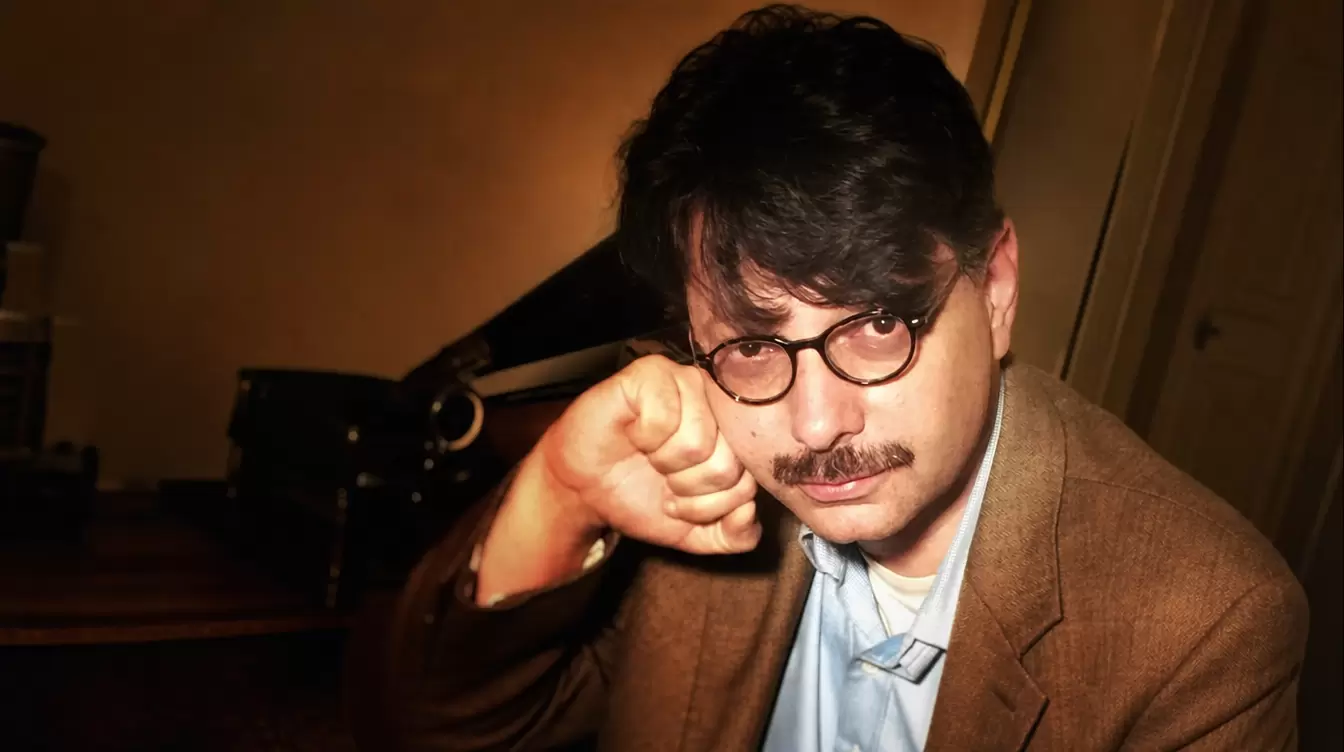
Curiosity as a Compass
What distinguishes Harnsberger from most musicians isn’t just the French horn. Rather, it’s what happened after he picked it up. Many performers spend a career mastering a single instrument. Harnsberger, however, kept reaching for the next one. Baritone saxophone. Bassoon. Piano. He wasn’t chasing virtuosity. Above all, he needed to understand how the whole machine worked.
“The combinations are virtually limitless,” he says of music, and that phrase functions almost as a personal philosophy. For Harnsberger, music has never been a destination. Instead, it’s an infinite set of doors, each one opening onto another.
For Harnsberger, music has never been a destination. Instead, it’s an infinite set of doors, each one opening onto another.
Not surprisingly, that sensibility took root early. His mother was an accomplished pianist who turned down an invitation to study in Rome, though music never left their household because of it. Throughout high school, mother and son performed horn-and-piano repertoire together at home. As a result, Harnsberger developed a core belief: serious music and personal passion aren’t two separate things. They never were.
He carried that belief to USC, where he studied music composition under Morton Lauridsen, whose choral works now anchor concert halls and churches around the world. The discipline demands panoramic thinking, and his years of instrument-hopping had already prepared him well for it. By Harnsberger’s own account, studying under Lauridsen ranks among the great honors of his musical life.
Section 02b · Beyond the PodiumFrom the Classroom to the Page
After USC, Harnsberger built a distinguished career in educational music publishing, rising to the position of Editor-in-Chief at Alfred Music. There he authored and co-authored best-selling titles spanning concert band, orchestra, music history, and music theory, including the award-winning Alfred’s Kid’s Guitar Method. Today, he runs his own imprint, LCH Music, publishing original works for French horn, full orchestra, concert band, and chamber ensembles.
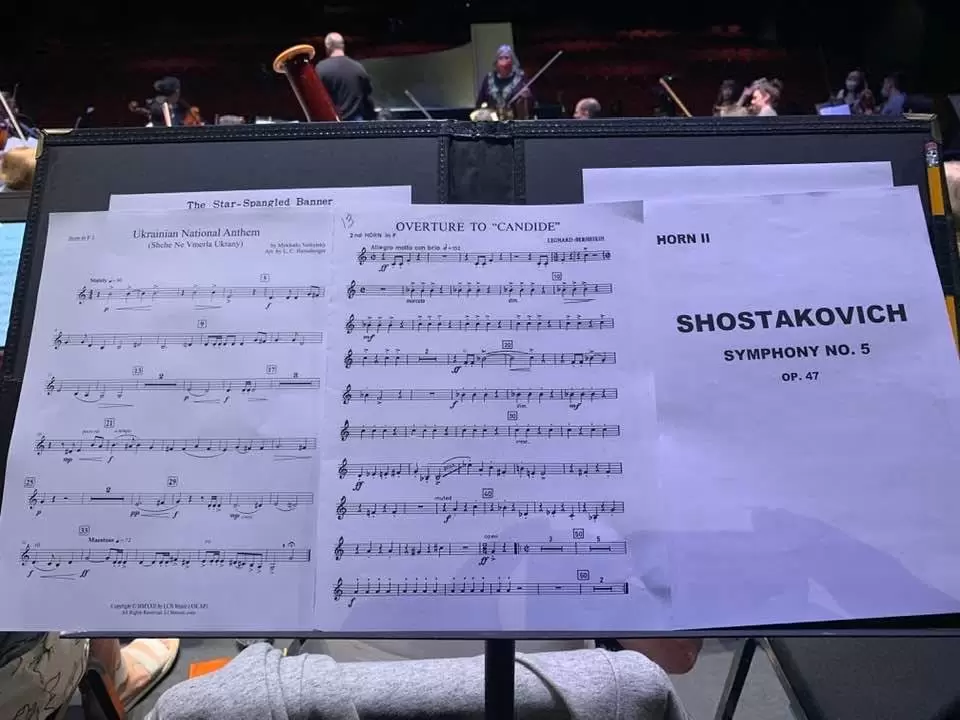
A Different Kind of Stage
Southern California audiences know Harnsberger best from the French horn section of the La Mirada Symphony, a chair he has occupied long enough to become, for many regular concertgoers, part of the orchestra’s identity. Still, that role represents only one corner of a wide creative life.
Away from the symphony stage, he performs with the Famous Players Orchestra, an ensemble that accompanies silent films using original scores from the early twentieth century. Some might dismiss that as a niche novelty. Harnsberger, though, sees it as something far more alive. In fact, the form fuses music and storytelling in real time before a live audience, and every performance is unrepeatable.
Beyond that work, he has moved steadily toward opera, a form built for the collision of music, drama, and history. Three projects now pull at his creative attention, and each one plants its roots deep in Los Angeles soil. Golondrina brings to life the remarkable story of how Olvera Street nearly fell to the wrecking ball in the 1920s before a determined group of advocates saved it. Executive Order 9066 follows Japanese American families as they leave their Los Angeles homes, pass through the makeshift barns of the Santa Anita Racetrack, and finally arrive at the punishing climate of the Manzanar War Relocation Center. And Mysterious Magic Brothers takes a lighter but no less ambitious turn, spinning a comic fantasy opera around the founding of Hollywood’s legendary Magic Castle, where the arts of music and illusion share the same stage.
Altogether, the three works reflect something Harnsberger believes deeply: Los Angeles has a history worth singing about. For him, music exists precisely to close the distance between an audience and truths that plain language can’t fully reach.
For him, music exists precisely to close the distance between people and truths that plain language can’t fully reach.
Still Asking Questions
Beyond music, his curiosity keeps spilling into unexpected places. Antique phonographs, early recordings, and classic cinema all pull at his attention. And then there’s hickory golf, played with clubs from the 1920s. Each interest reflects the same instinct: understand not just where something stands today, but also where it came from and what it felt like to discover it for the first time.
In the end, that instinct connects the teenager staring at a Beatles album cover to the composer, performer, and explorer he has become. The question never changed. In fact, the answers just kept multiplying.
The French horn turned out to be only the beginning.

Continue exploring.
Hear the music.
La Mirada Symphony brings together musicians, stories, and community through live orchestral music. Explore upcoming performances and help support free symphonic concerts for the community.