
Why Did Russian Composers Become Obsessed With Spain?
Why Did Russian Composers Become Obsessed With Spain?
Long before recordings or streaming, Russian composers fell hard for the rhythms of Spain. Mikhail Glinka went there to listen, and decades later Nikolai Rimsky-Korsakov turned that fascination into one of the most dazzling showpieces ever written for orchestra.
- How Glinka found a new sound in Spain.
- Why Rimsky-Korsakov's orchestra applauded first.
- Spain as heard through Russian ears.
Valladolid, 1845.
A restless Russian composer sits among the guests at a merchant family’s gathering in northern Spain. The merchant’s son, a young guitarist named Félix Castilla, tears through a jota aragonesa. The visitor is Mikhail Glinka, later hailed as the father of Russian classical music, and he is listening hard. Later, in his memoirs, Glinka recalled that Castilla played with real animation. In fact, he carried that jota and its variations away in his memory. That memory became an overture, and it sparked a love affair between Russian composers and Spain that lasted the rest of the century.
On paper, the pairing makes little sense. Nineteenth-century Russia meant long winters and village songs. Its young national music scene was still figuring out what it wanted to sound like. Spain, in contrast, conjured guitars and Mediterranean heat at the opposite corner of Europe. Yet Russian composers kept heading south in their imaginations. They did far more than borrow a tune or toss castanets into the percussion section. Above all, they studied Spanish dance rhythms closely and found something priceless: a license to experiment with the sound of the orchestra itself.
Glinka Goes South
Glinka did not dream up Spain from a travel book in St. Petersburg. He went, and he stayed for roughly two years in the mid-1840s. He moved through Valladolid, Madrid, Granada and Seville, along with many smaller towns. In Granada, for example, he spent the winter studying with the guitarist Francisco Rodríguez Murciano. Glinka admired him as a man of the people with marvelous talent. Everywhere he traveled, he listened to working musicians and wrote down what he heard.
The Castilla encounter paid off first. Glinka turned that jota into the Capriccio brillante on the Jota Aragonesa, completed in 1845. Since then, most programs have called it the First Spanish Overture. It is a dance piece at heart, full of snap and swagger. It also proved that a symphony orchestra could move like a guitarist’s strumming hand.
Still, Glinka wasn’t finished. His second Spanish portrait began life in 1848 as Recuerdos de Castilla. In 1851 it reemerged, reworked, as Souvenir of a Summer Night in Madrid, the Second Spanish Overture. This time he was chasing something bigger than a dance. Specifically, he wanted listeners to feel a place.
Can an Orchestra Paint a City?
That question sits at the heart of A Summer Night in Madrid. Glinka takes melodies and dance tunes he gathered in Spain and passes them around the orchestra. One instrumental color blooms and fades, and another takes its place. A melody surfaces and a second one answers it. Meanwhile, dance rhythms flicker in and out as the colors shift underneath. The effect feels almost cinematic, except that listeners build Madrid inside their own heads. Glinka hands you a postcard without a single photograph.
Eventually, the idea traveled. Glinka’s music became the foundation of a Russian national school. The young composers around Mily Balakirev in St. Petersburg studied his scores with something close to reverence. Balakirev even wrote his own Overture on a Spanish March Theme in 1857. Meanwhile, one of the youngest members of his circle was paying close attention. He was a naval officer named Nikolai Rimsky-Korsakov.
Enter Rimsky-Korsakov
About four decades after Glinka’s Spanish travels, Rimsky-Korsakov turned south himself. His ship had called at a Spanish port during his naval service, so he had glimpsed the country in person. In the summer of 1887, though, he worked from a printed collection of Spanish folk music. The result was Capriccio Espagnol, Op. 34. At first, he imagined it as a virtuoso fantasy for violin and orchestra. He soon decided that those lively tunes belonged to the full orchestra.
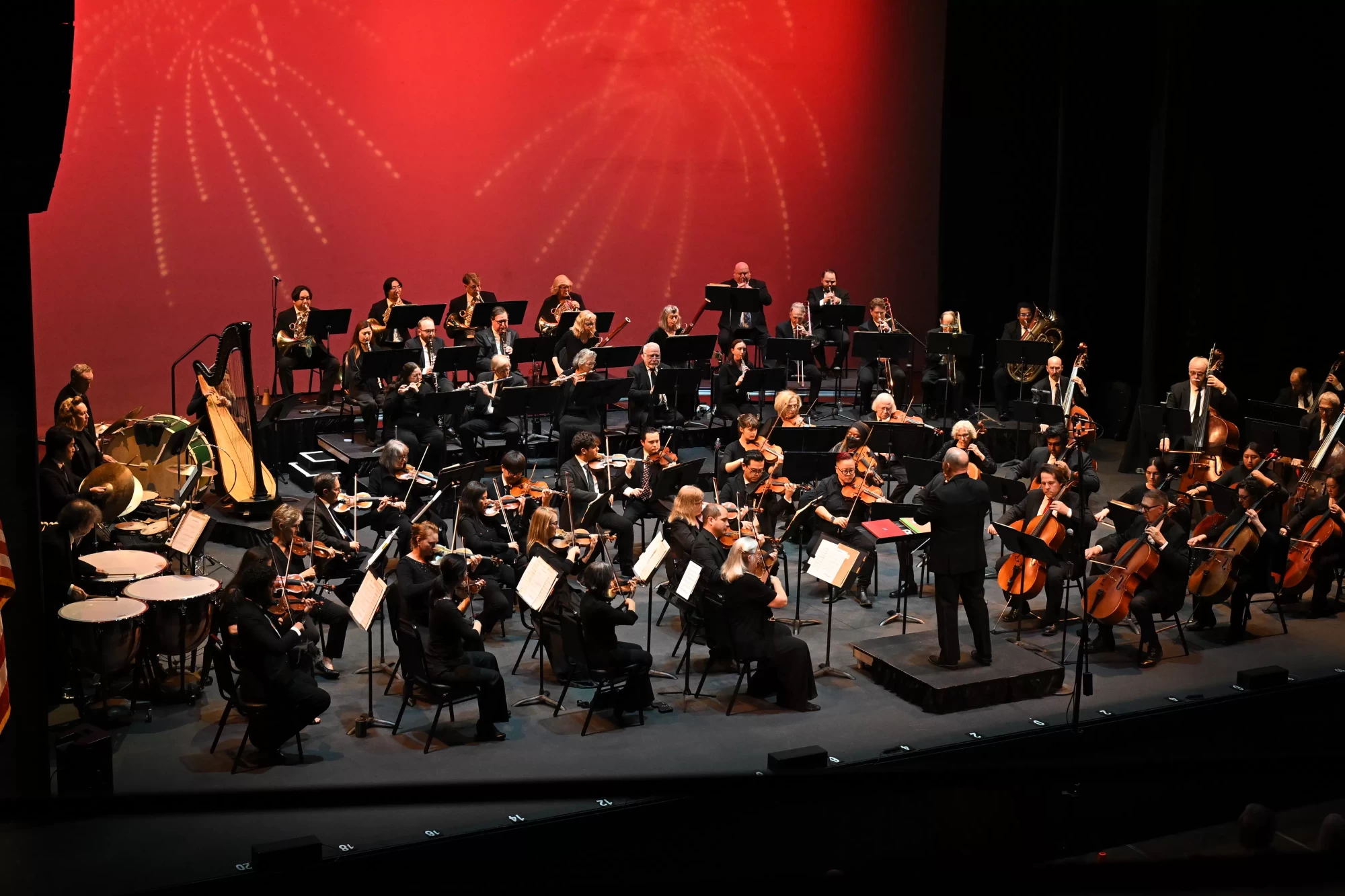
So instead of a showpiece for one soloist, he wrote a showpiece for nearly everyone on stage. The violin gets its moment, and so does the clarinet. Then the flute, horn, harp, and trumpet each step forward in turn. The orchestra stops behaving like one enormous machine. Instead, it starts acting like a band of virtuosos passing the spotlight down the line. In effect, Rimsky-Korsakov made the whole orchestra the soloist.
The Orchestra Applauded First
Then came the kind of rehearsal composers dream about. The Capriccio premiered in St. Petersburg on October 31, 1887. Rimsky-Korsakov conducted the orchestra of the Imperial Russian Opera, but the players reacted before the public did. “At the first rehearsal the first movement had hardly finished when the whole orchestra began to applaud,” he recalled in his memoir, My Musical Life. Applause followed the other sections too, whenever the music paused long enough.
Moved, Rimsky-Korsakov asked the musicians for the privilege of dedicating the piece to them. They accepted with delight. The published score carries a dedication to the orchestra of the Imperial Russian Opera. Those players earned a place in the work’s history before a single ticket holder heard a note. At the concert, the composer remembered, they played “with a perfection and enthusiasm the like of which it never possessed subsequently.” Afterward, the audience demanded an encore of the entire piece.
That reaction reveals something essential about this music: it is a blast to play. Rimsky-Korsakov wrote for the people holding the instruments as much as for the people in the seats. As a result, he gave section after section a chance to show off.
Rimsky-Korsakov Didn’t Just “Orchestrate” the Music
History remembers Rimsky-Korsakov as one of the great masters of orchestration. He eventually wrote the textbook on the subject. In 1887, critics praised the Capriccio as a gorgeously orchestrated piece. However, he thought they had missed the point entirely. He wrote that the popular verdict, “that the Capriccio is a magnificently orchestrated piece,” was wrong.
In his view, the colors were not a coat of paint applied after the real work. Those colors were the music. “The Capriccio is a brilliant composition for the orchestra,” he explained. He listed “the change of timbres,” the choice of figures “exactly suiting each kind of instrument,” and “brief virtuoso cadenzas for instruments solo.” Along with the percussion rhythms, he said, these “constitute here the very essence of the composition and not its garb or orchestration.” Of course, Spanish dance themes gave him rich material to work with. Still, the orchestra itself became his canvas.
How Do You Make an Orchestra Sound Spanish?
All of this raises a fair question. How does an orchestra in St. Petersburg convince an audience it has landed in Spain? Much of the answer lies in rhythm. For example, Spanish dance patterns instantly suggest bodies in motion. The music never just travels from one note to the next. It dances.
Percussion supplies the flash. Castanets and tambourine, backed by triangle and cymbals, throw off bursts of color. They radically change the character of a symphony orchestra. Rimsky-Korsakov goes further still, bouncing ideas among the violin, clarinet, flute, horn, trumpet, and harp. Underneath, the percussion sharpens the dance rhythms. Similarly, plucked and strummed strings mimic the bite of a guitar. Instead of one steady color, listeners hear a kaleidoscope that never stops turning.
Five Scenes, One Orchestra
Rimsky-Korsakov built Capriccio Espagnol in five connected sections that run without a break. It opens with an Alborada, a morning song rooted in the music of Asturias in northern Spain. Next comes a set of Variations, where the melody changes color every time it changes hands. Then the Alborada returns, with the roles reshuffled and the solo violin out front.
The fourth section, Scene and Gypsy Song, is the big showcase. Solo cadenzas tumble out one after another. Finally, the Fandango of the Asturias sends the whole orchestra racing for the finish line. Meanwhile, fragments of the opening Alborada flash back into view along the way.
Rimsky-Korsakov never plays a Spanish tune the same way twice. Hand a melody to the clarinet, and it has one personality. Then give it to the violin over castanets and tambourine, and it becomes someone else entirely. That is orchestration as storytelling.
But Is It Really Spanish Music?
Here the story gets more complicated, and more interesting. Glinka really did travel through Spain and collect material. Rimsky-Korsakov built the Capriccio on genuine Spanish melodies. Both men, however, remained Russian composers working inside the European concert tradition. Neither, therefore, produced a field recording of Spain. They gave us Spain as heard through Russian ears, and that distinction matters.
Across 19th-century Europe, composers fell hard for music from beyond their own borders. Spain proved especially irresistible, and the French caught the fever too. For instance, Georges Bizet conjured Seville for Carmen in 1875 without ever visiting Spain. Likewise, Emmanuel Chabrier came home from a Spanish trip and wrote España in 1883. Later, Claude Debussy and Maurice Ravel found their own versions of the country. Some of the orchestral music most closely tied to Spain came from composers born somewhere else.
Yet Spanish musicians did not always object. Manuel de Falla was the leading Spanish composer of the early 20th century. He praised Ravel’s Rapsodie espagnole for its “free use of the modal rhythms and melodies and ornamental figures of our ‘popular’ music.” An outsider’s Spain could still ring true to the people who lived there. That sharpens the real question: what did all these composers hear in Spain that set their imaginations on fire?
From Glinka to Rimsky-Korsakov
For the Russians, much of the answer leads back to Glinka. He went to Spain, listened carefully and brought its possibilities home to the orchestra. A generation later, Rimsky-Korsakov picked up that thread and pulled it much further. His Spanish dance material showed how dramatically an orchestra could change color from moment to moment. Put the two side by side and a clear progression emerges.
Glinka used the orchestra to paint Spain. Rimsky-Korsakov used Spain to reveal what an orchestra could do.
Every Composer Heard a Different Spain
Maybe that is why Spanish-inspired orchestral music never gets old. There is no single musical Spain. Glinka heard one version, and Rimsky-Korsakov imagined another. Bizet invented his own for the Paris stage too. Spanish composers such as Enrique Granados and Joaquín Rodrigo approached their country’s traditions from the inside. Line these composers up side by side and no single definition of Spain appears. You get a collection of impressions, or, to borrow a better word, sketches.
That word carries a history of its own. In 1960, Miles Davis and the arranger Gil Evans released Sketches of Spain. The album centers on their reimagining of Rodrigo’s Concierto de Aranjuez. With it, the Spanish fever jumped from the concert hall into a jazz studio. Composers keep hearing Spain and remaking it in their own language.
On March 14, 2027, the La Mirada Symphony explores those perspectives in Sketches of Spain at the La Mirada Theatre for the Performing Arts. The program features Glinka’s A Summer Night in Madrid and music by Granados. Finally, Rodrigo’s Concierto de Aranjuez and Rimsky-Korsakov’s Capriccio Espagnol round it out. These works cross borders and generations. They also leave us with a question first stirred at a family gathering in Valladolid nearly two centuries ago.